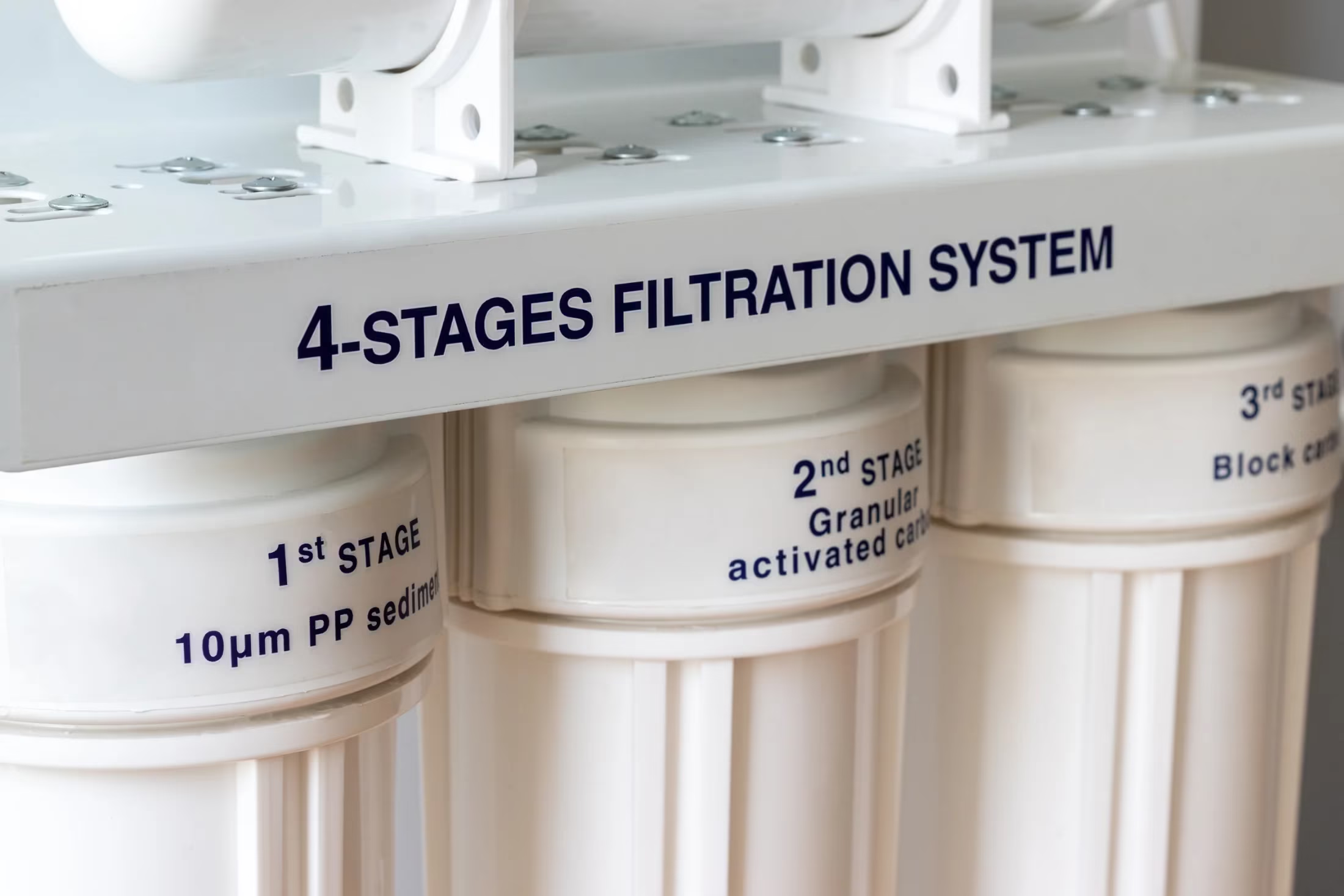
Not all watermakers are built the same way. When you look closely at what separates long-lasting, serviceable systems from those that fail in demanding conditions, the drive mechanism is often where the difference starts. Belt-driven watermakers represent one of the most proven, field-tested approaches to powering a reverse osmosis system, and ECHOTec has refined this design over decades of real-world operation across the Caribbean, Pacific, and beyond.
If you are evaluating watermaker options and want to understand what a belt-driven watermaker actually offers over direct-drive or electronically controlled alternatives, this guide covers everything you need to know.
How a Belt-Driven Watermaker System Works
A belt-driven watermaker uses a V-belt or serpentine belt connecting a drive pulley to the high-pressure pump. The drive source is typically a diesel engine, either the vessel’s main propulsion engine or a dedicated auxiliary, through a power take-off (PTO) arrangement. As the engine runs, the belt transmits rotational power to the pump, pressurizing the feedwater against the RO membrane to force freshwater production through osmosis.
The belt drive pulley system acts as a mechanical intermediary that isolates the pump from direct shaft coupling. This isolation provides a key operational advantage: the belt absorbs vibration and shock loads that would otherwise be transmitted directly into the pump housing, reducing wear on the pump’s internal components over time.
Why Belt-Driven Systems Remain Popular Among Experienced Operators
In a market increasingly crowded with electronic control systems, variable frequency drives, and smart watermaker controllers, the belt-driven system might seem like an older approach. In practice, it is often the smarter choice for operators who need reliability far from service centers.
Mechanical Simplicity
A belt drive transmission system has no microcontrollers, no electronic motor controllers, no pressure transducers running through a circuit board, and no firmware to update. The mechanical components are inspectable, replaceable, and understood by any competent marine engineer or diesel mechanic anywhere in the world. When something wears or breaks, diagnosis is visual and repair is straightforward.
ECHOTec’s engineering philosophy aligns directly with this principle. Rather than building complexity into the drive system, ECHOTec focuses engineering investment on the quality of the pump, the membrane housing, and the filtration components, where reliability actually matters for water quality.
Compatibility With Existing Engine Systems
Many commercial vessels, large yachts, and working boats already have engine-driven accessory systems such as compressors, alternators, and hydraulic pumps connected through belt drive pulley systems. Adding a watermaker through the same interface requires no additional electrical infrastructure and takes advantage of power that is already being generated whenever the engine runs. The ECHOTec belt-driven watermaker line integrates cleanly with existing marine diesel installations.
High Production Capacity
Because belt-driven systems draw power directly from the engine, they can achieve higher continuous production rates than most battery-powered or shore-power-dependent systems. For vessels with significant daily water demand, crews, or charter guests, the production capacity of an engine-driven belt watermaker is difficult to match through electric pump systems alone.
Components of a Belt-Driven Watermaker System
Understanding the major components helps operators maintain the system correctly and identify wear before it becomes a failure.
Drive Belt
The belt is the highest-wear component in a belt-driven system and should be inspected regularly. Look for cracking, fraying, glazing on the contact surfaces, or uneven wear patterns that may indicate misalignment. Marine environments expose belts to heat, UV radiation, salt spray, and ozone, all of which accelerate degradation compared to dry land applications. Carry at least one spare belt matching your system’s specifications on any extended voyage.
Pulleys and Tensioner
Pulley alignment is critical for belt longevity and pump performance. Misaligned pulleys cause uneven belt wear, vibration, and premature bearing failure in both the pulley idler and the pump’s front seal. A properly tensioned belt should deflect slightly under firm thumb pressure at the midpoint of the span. Too-tight a belt overloads bearings. Too loose a belt causes slip, heat generation, and vibration.
High-Pressure Pump
ECHOTec belt-driven systems use ceramic plunger pumps engineered for long service life in seawater applications. Ceramic plungers resist corrosion and abrasion far better than stainless steel alternatives in aggressive seawater feedwater conditions. Regular inspection of pump oil level, valve condition, and plunger seal integrity extends service intervals significantly. Full maintenance guidance is available through the ECHOTec service resources.
RO Membrane and Housing
The high-pressure pump forces pretreated feedwater through the RO membrane at 800 to 900 psi. The membrane rejects dissolved salts, producing permeate (product water) and a concentrate (brine) stream that is returned to the sea. Membrane life in a well-maintained belt-driven system typically ranges from 3 to 7 years under normal marine conditions, though this varies significantly based on feedwater quality, operating frequency, and storage practices.
Maintenance Schedule for Belt-Driven Watermakers
Belt-driven systems reward consistent, preventive maintenance. Here is a practical schedule for keeping the system performing at full capacity.
After Every Use
Flush the membrane with fresh water if the system will not be operated for more than three to five days. Salt left on the membrane surface promotes biological fouling and scaling, which degrade membrane performance over time. ECHOTec recommends using the system’s built-in flush function after each session when possible.
Monthly
Inspect the drive belt for cracks, glazing, and wear. Check belt tension and pulley alignment. Inspect the pump oil level and check for milky discoloration that indicates water intrusion through a worn plunger seal. Replace or clean the pre-filter sediment cartridge if the flow is reduced or the filter has been in service for 30 or more operating hours.
Annually or Every 500 Hours
Replace the drive belt as a preventive measure regardless of visual condition. Inspect and service the pump valves and oil & water seals, and replace the pump oil. Replace all pre-filtration elements. Test membrane rejection rate to benchmark performance against the system’s original specification. If the rejection rate has dropped, a membrane cleaning or replacement may be warranted.
Troubleshooting Common Belt-Driven System Issues
Low Water Output
Reduced production from a belt-driven watermaker is most commonly caused by a worn or slipping drive belt, a fouled pre-filter restricting feedwater flow, or a degraded RO membrane. Check belt tension first, as it is the quickest diagnostic step. If tension is correct, check the pre-filter pressure differential and inspect the membrane’s rejection rate.
Excessive Vibration
Vibration in a belt-driven system typically points to pulley misalignment, a worn or imbalanced belt, or bearing wear in the idler or pump front bearing. Address vibration issues promptly as they accelerate wear throughout the entire drivetrain.
Pump Oil Contamination
Milky or cloudy pump oil indicates water ingress, usually through a worn plunger packing seal. A plunger seal replacement is a straightforward service item for any experienced marine mechanic and should be addressed promptly to prevent corrosion of internal pump components.
Belt-Driven Watermakers in Long-Range Cruising and Commercial Operations
The operational track record of belt-driven watermakers in demanding applications speaks for itself. Long-range cruising sailors appreciate the independence from shore power that an engine-driven system provides. Commercial operators value the high daily production volume achievable from a properly sized belt-driven watermaker system. ECHOTec’s belt-driven product line is engineered specifically for these demanding use cases, with components selected for corrosion resistance, repairability, and long service intervals.
Frequently Asked Questions
How long does a drive belt last on a watermaker?
Under normal marine operating conditions, a quality V-belt in a watermaker application typically lasts between 500 and 1,000 engine hours, though this varies based on belt quality, pulley alignment, operating temperature, and UV exposure. Carrying a spare belt and replacing it proactively on a fixed schedule is the most cost-effective approach for offshore operators.
Can a belt-driven watermaker be upgraded to a different drive system?
In most cases, a belt-driven watermaker is purpose-built for engine integration and is not easily converted to a direct electric drive without significant modification to the pump assembly and mounting arrangement. If your operating profile changes and you need electric operation, ECHOTec’s DC watermaker line offers excellent performance as a complementary or replacement system.
What is the main advantage of a belt drive over a direct-coupled pump?
The primary advantage of a belt drive over a direct-coupled system is vibration isolation and the ability to adjust the drive ratio by changing pulley sizes. This gives the installer flexibility to optimize the pump’s operating RPM for maximum efficiency across different engine speed ranges, and protects the pump from the shock and torsional vibration inherent in diesel engines.
How do I know if my belt-driven watermaker pump needs service?
Key indicators that a pump requires service include reduced product water output at normal operating RPM, a drop in high-pressure reading, milky or discolored pump oil indicating water ingress through plunger seals, unusual noise or vibration from the pump housing, and visible oil weeping around the plunger area. Annual servicing by a qualified technician is the best way to catch wear before it leads to unplanned failure.