The appeal of a portable watermaker is easy to understand. No installation. No through-hulls. No wiring. You buy it, stow it, and pull it out when you need it. On paper, it looks like the simpler, smarter choice.
But here is what the specs sheet does not always tell you: a portable watermaker and an installed boat watermaker are solving slightly different problems. If you are choosing between them, the right answer depends on how you actually use your vessel, how far offshore you go, and what kind of water security you genuinely need.
This post lays out the real comparison. Output, cost, reliability, power requirements, and the specific scenarios where each type earns its place on board. By the end, you will know which system fits your situation and why.
What Is a Portable Watermaker?
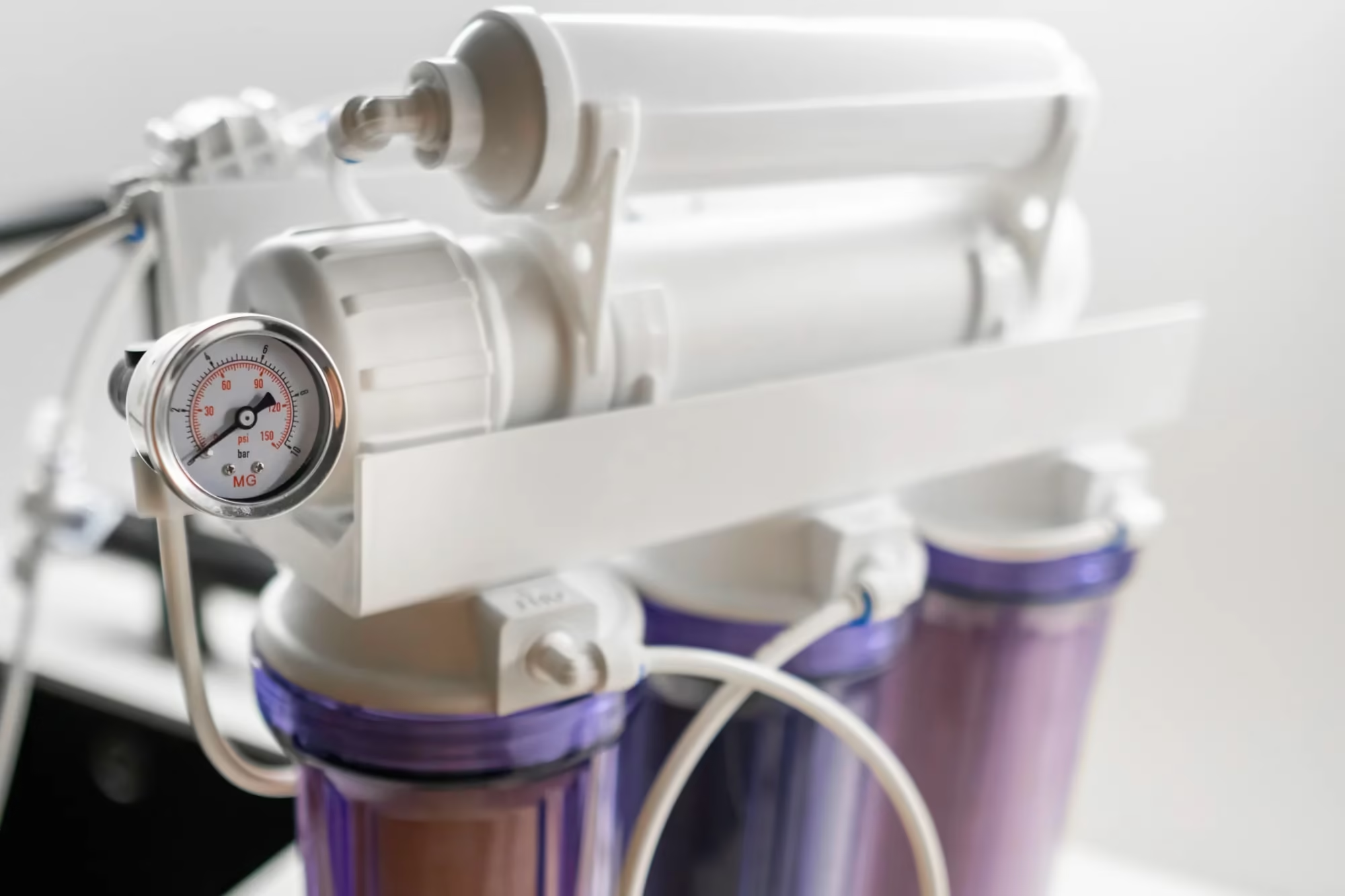
A portable watermaker is a self-contained, manually operated or electrically powered reverse osmosis unit designed to be used without permanent installation. Most units are compact enough to be carried in a bag or stowed in a locker, and they connect to the water intake via a hose dropped over the side of the vessel.
How Portable Watermakers Work
The underlying technology is the same as any RO system: seawater is pressurised through a semi-permeable membrane that strips out salt, producing fresh water. In a portable unit, the pump is typically hand-operated or runs from a small 12V connection. Output is collected directly into a container or tank.
Who Typically Buys a Portable Watermaker
Portable units attract two main groups. The first is weekend and coastal boaters who want emergency backup water capability without committing to a full installation. The second is budget-conscious buyers who are drawn to the lower upfront cost and are willing to accept the tradeoffs that come with it.
They are also sometimes purchased as a secondary system or emergency backup alongside an installed unit.
What Is an Installed Boat Watermaker?
An installed watermaker is a permanent reverse osmosis desalination system integrated into the vessel. It connects to the vessel’s through-hull intake, runs off the onboard electrical system, and feeds directly into the water tank. Once set up, it functions like any other onboard system: turn it on, run it, turn it off.
How Installed Systems Are Integrated on a Vessel
The installation involves mounting the pump, pre-filters, membrane housing, and control panel in a dedicated space, typically in the engine room or a utility locker. A seawater intake through-hull feeds the system. The fresh water output plumbs into the main tank. The concentrate brine exits through a dedicated overboard outlet. Installation and setup is straightforward for a competent marine electrician or a hands-on boat owner following a clear guide.
Who Should Choose an Installed System
Offshore sailors. Liveaboards. Anyone planning extended passages or cruising in areas where reliable water access is not guaranteed. If fresh water is a critical operational need rather than a convenience, an installed marine watermaker is the correct choice.
Portable vs. Installed: The Key Differences
The differences between these two system types go beyond how they are physically attached to the boat.
Output and Capacity
This is the most significant practical gap. A hand-operated portable watermaker typically produces 1 to 3 gallons per hour under ideal conditions. A motorised portable unit might reach 3 to 5 gallons per hour with consistent effort or 12V draw.
An installed boat watermaker for a 40-foot sailboat typically produces 20 to 40 gallons per day running a standard session of two to four hours. Larger installed systems produce 60 GPD or more. For a crew of two on passage, making 25 gallons per day provides comfortable water independence with margin to spare.
The gap matters most when demand is highest: extended passages, hot climates, or larger crews.
Power Requirements
Most portable watermakers rely on manual operation or a modest 12V draw from a small motor. They are low-demand but also low-output, and hand-operated models require significant physical effort to run for the time needed to produce useful quantities of water.
Installed systems draw more power but do it automatically and efficiently. A DC watermaker system for a cruising sailboat typically draws 4 to 10 amps at 12V, producing 20 to 40 gallons per session, which fits comfortably within a well-managed solar charging setup.
Reliability and Longevity
Portable units are built to price points. The components, seals, and membranes in most portable systems are not engineered for daily offshore use over multiple seasons. They are designed for occasional use, and that is reflected in their construction.
An installed marine watermaker built to commercial-grade standards uses corrosion-resistant materials, quality pumps, and membranes rated for years of regular operation. ECHOTec systems use ceramic plunger pumps and are built to NEMA, NSF, and ASTM standards, with over 40 million collective real-world operating hours behind the engineering. The components are globally serviceable. That is a different category of reliability.
Ease of Use and Operation
Portable units require setup each time: retrieving from storage, deploying the intake hose, operating the pump, collecting the output, and stowing again. For emergency use, that process is manageable. For daily production on a long passage, it becomes a burden.
An installed system turns on with a switch. Output goes straight to the tank. You check the TDS reading periodically, replace pre-filters on schedule, and the system handles the rest.
What Does a Portable Watermaker Cost vs. an Installed System?
Upfront Cost
Quality portable watermakers typically run from $300 to $800 for hand-operated models, and $800 to $2,500 for motorised units with meaningful output. Installed systems for cruising vessels start around $4000 to $6000 for a compact DC unit and scale up from there depending on output and features.
The gap looks significant until you account for what you are actually buying.
Long-Term Cost of Ownership
Portable units have lower upfront costs but shorter service lives, less durable membranes, and limited support infrastructure when something fails offshore. An installed system from a manufacturer with global parts availability and a track record of 5,000-plus units in service is a long-term asset, not a consumable.
The real cost comparison is not the purchase price. It is the cost per gallon of water produced reliably over the life of the system, factored against the risk of a failure at sea when you have no alternative.
When Does a Portable Watermaker Make Sense?
Portable watermakers are genuinely useful in specific situations:
- As an emergency backup aboard a vessel that already has an installed system
- For coastal and weekend boaters who rarely venture beyond day-sail range and want occasional supplemental water capability
- For small craft, kayaks, or day boats where a permanent installation is not practical
- For daysailers or charter guests as a low-stakes trial before committing to a full system
If your typical trip is a weekend coastal passage with marina stops, a portable unit may be all you need. The honest question is whether you are a weekend sailor who ventures close to shore, or a cruiser who goes offshore. The answer to that question should drive your decision more than the price difference.
When Is an Installed Watermaker the Better Choice?
Long Offshore Passages
Once you are more than a day’s sail from a reliable water source, a portable watermaker is not sufficient backup for a primary water need. Output is too low and reliability too uncertain to trust as your main supply on a 10 or 20-day passage. An installed sailboat watermaker rated at 30 GPD or more gives you a real margin.
According to BoatUS guidance on passage planning, most offshore sailors plan for a minimum of one gallon per person per day for drinking and cooking alone, with realistic consumption per person closer to five to seven gallons when washing is included. For a crew of two on a 10-day passage, that means 100 to 140 gallons of freshwater security. A portable unit producing three gallons per hour at best is not the right tool for that job.
Liveaboards and Full-Time Cruisers
If the boat is your home, your water system is your infrastructure. The standards you should hold it to are the same as any utility in a residence. Portables are camping gear. Installed systems are plumbing.
Larger Vessels With Higher Water Demand
A family of four on a 50-foot cruiser, a charter vessel with rotating guests, or a motor yacht with full galley and shower use is going to go through water faster than any portable system can realistically replace. The maths do not work. An installed system, properly sized to the vessel and crew, does.
What to Ask Before You Decide
If you are still weighing the options, these three questions will give you a clearer answer than any spec comparison:
How far offshore do you typically sail?
If your answer is “never more than 20 miles from a marina,” a portable might cover your needs. If your answer involves offshore passages, island hopping, or extended cruising, you need an installed system.
How much water does your crew use daily?
Calculate it honestly: drinking, cooking, washing produce, personal hygiene, boat washing. Most cruising crews use five to ten gallons per person per day. Size your solution to that number, not to the minimum you could survive on.
Do you want a set-and-forget system or something you stow and deploy?
One is infrastructure. The other is a piece of kit. Neither answer is wrong, but they suit different sailors. Serious offshore cruisers almost universally choose installed systems for a reason.
Making the Right Call
A portable watermaker can solve a specific, limited problem. It is compact, low-cost, and useful in the right context.
An installed boat watermaker is freshwater infrastructure. It produces meaningful output every day, works within your existing vessel systems, and gives you the kind of water independence that changes how you cruise. For anyone sailing offshore, living aboard, or cruising for more than a long weekend, the installed system is not just the better option. It is the appropriate one.
If you want help working out the right system for your vessel, explore ECHOTec’s full range or contact our team directly. We are happy to help you figure out exactly what fits your setup.
Frequently Asked Questions
What is the main difference between a portable and an installed boat watermaker?
A portable watermaker is a self-contained unit that requires no permanent installation and is used on demand. An installed watermaker is permanently integrated into the vessel, plumbed into the water tank, and operates as part of the onboard systems. Installed systems produce significantly more water per day, are more reliable for offshore use, and have longer service lives.
Can a portable watermaker replace an installed system for offshore sailing?
For most offshore passages, no. Portable watermakers typically produce one to five gallons per hour under ideal conditions, which is not sufficient for daily crew water demand on an extended passage. Serious offshore sailors and liveaboards rely on installed systems rated at 20 GPD or more to meet real-world demand comfortably.
How much does a portable watermaker cost compared to an installed unit?
Portable units typically range from $300 for basic hand-operated models to around $2,500 for motorised units. Installed DC watermakers for cruising vessels start around $2,000 to $3,500 and scale up based on output. The long-term cost of ownership, including membrane life, reliability, and parts availability, often favours installed systems over multiple seasons of use.
Is a portable watermaker a good emergency backup?
Yes, a quality portable watermaker serves well as emergency backup water capability, particularly on vessels that already have an installed system. For vessels without an installed system, a portable unit provides a safety net for coastal sailing but should not be treated as a primary water source for offshore passages.
What power source does an installed boat watermaker need?
Most cruising sailboats use DC-powered systems running on 12V or 24V battery banks, compatible with solar and wind charging setups. Larger vessels with generator capacity may use AC-powered systems for higher output. Belt-driven systems connect to the main engine and are suited to motor vessels or catamarans that run their engines regularly.
How do I choose the right watermaker for my sailboat?
Start with your daily water demand per person, how far offshore you sail, and what power setup your vessel runs. A compact DC system producing 20 to 30 GPD suits most cruising couples on a 38 to 45-foot sailboat. Larger crews or vessels need proportionally higher output. Speaking with a watermaker specialist before purchasing will save you from sizing errors in either direction.