Brackish water sits between fresh water and salt water. It holds more salt than a river or a lake, but less than the ocean.
Scientists measure the amount of salt in water in parts per thousand (ppt). Brackish water usually falls between 0.5 and 30 ppt. The average salinity of seawater is about 35 ppt.
Here is what those numbers look like as salt per gallon:
| Type of water | Salinity (ppt) | Salt per gallon |
| Fresh water | Under 0.5 | Less than 2 grams |
| Brackish water | 0.5 to 30 | 2 to 113 grams |
| Seawater | About 35 | About 132 grams |
That range matters. Less salt means less pressure is needed to push water through a membrane, so brackish water takes less energy to treat than seawater. It still has to be treated. You cannot drink it as it comes.
We build engine-driven and electric watermakers, and we answer questions about brackish sources every day. Here is what you need to know.
Where do you find brackish water?
Most brackish water sits in estuaries and along mangrove coastlines, where a river meets the sea and the two mix. You also see it in coastal lagoons, tidal creeks, and salt marshes.
These bodies of water support their own ecosystems. Brackish water fish and aquatic plants have adapted to live between freshwater habitats and fully marine ones. Some aquarium keepers recreate the same conditions at home, managing salinity, pH, and temperature to match.
Brackish water occurring inland is usually a groundwater problem. When too much fresh water gets pumped out of a coastal aquifer, seawater moves in to replace it. Wells that once ran fresh start turning salty.
Is brackish water drinkable?
Not straight from the source. The salt content is high enough to taste bad and high enough to cause problems. Your body has to flush out excess salt using water it cannot spare, which leads to dehydration rather than relieving it.
Treated brackish water is a different story. Reverse osmosis removes the salt reliably, and the water that comes out the other side is safe to drink. Our sailboat desalination systems are built to do exactly that for people anchored in or living near brackish surface waters.
How do you desalinate brackish water?
Reverse osmosis is the standard method, and it performs especially well in brackish conditions. Three reasons for that:
- Energy efficiency. Lower salinity means lower operating pressure.
- Versatility. The same system handles brackish water and full seawater.
- Cost. Less pressure and less power mean lower running costs per gallon produced.
Electrodialysis is the other option. It uses an electric current and ion-selective membranes to pull salt ions out of the water. It works, but it suits fixed industrial plants better than boats or homes.
The brackish water desalination process, step by step
Systems vary, but most follow the same path.
- Pre-treatment. Brackish sources carry silt, sediment, and organic matter. Filtration, sedimentation, or coagulation removes it before the water reaches the membranes.
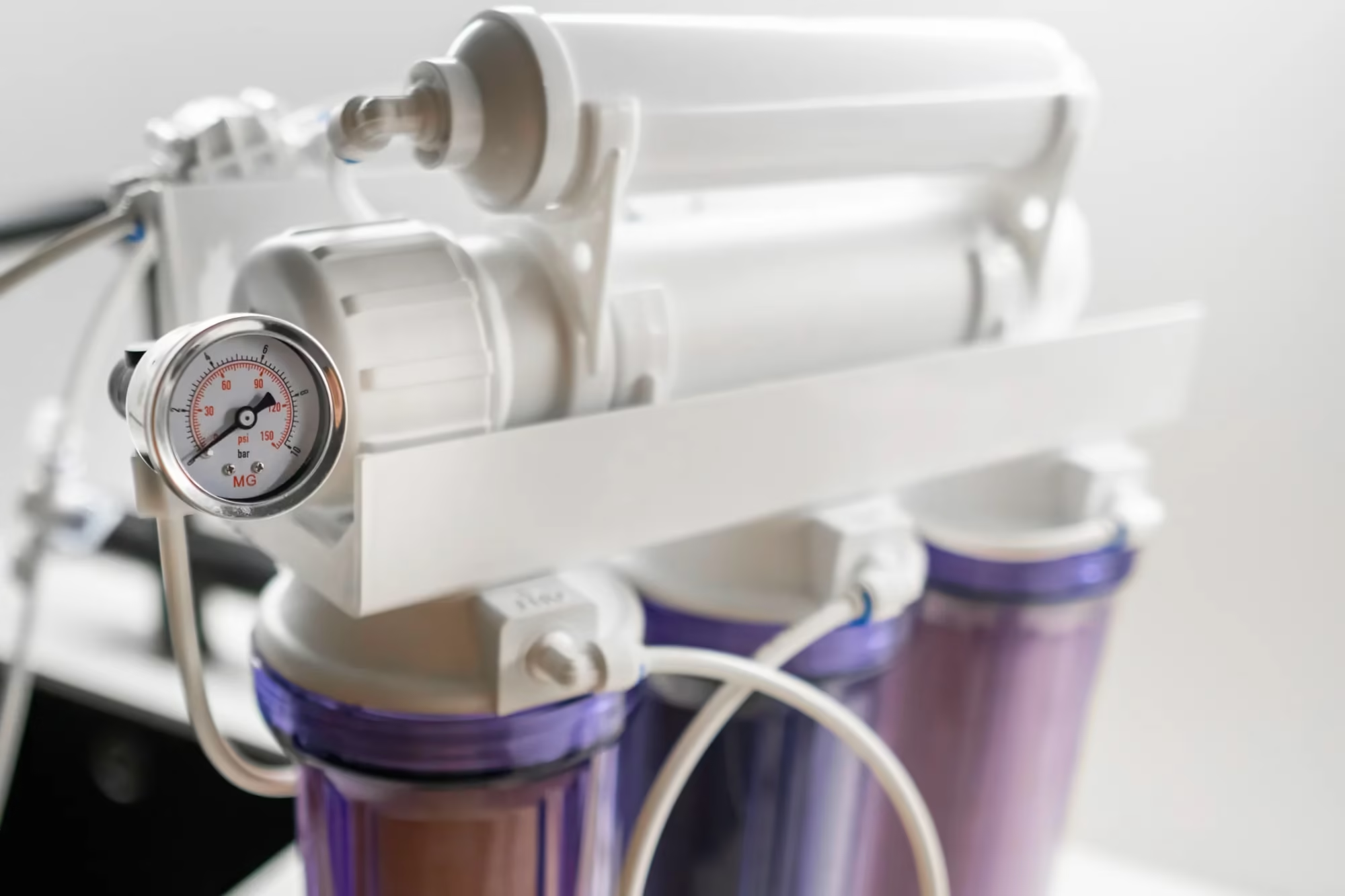
- Reverse osmosis. A high-pressure pump forces the water through semi-permeable membranes. Water molecules pass. Salt and impurities do not.
- Concentrate disposal. What is left behind is concentrated brine. It gets discharged back to the sea, injected into deep wells, or treated further.
- Post-treatment. The fresh water is balanced for pH, remineralized for taste, and disinfected to meet drinking water standards.
- Storage and distribution. The finished water goes to a tank, then out to taps, irrigation, or industrial use.
Our systems use high-pressure filtration built for exactly these conditions. Common choices include our 12/24V DC watermakers and our AC systems for small boats. For larger demands, look at the ECHOTec Eco-Series and the BHL Series.
Who uses brackish water desalination?
- Municipalities and water utilities
- Farms and agricultural operations
- Industrial manufacturers
- Coastal communities and island developments
- Boat owners cruising estuaries and river mouths
- Environmental conservation organizations
Is brackish water good for anything?
Yes, once it is treated. In regions where fresh water is scarce, treated brackish water supplies drinking water, crops, and industry. A reverse osmosis watermaker is the most practical way to make it usable, whether that means a compact boat desalinator or a BHL Series unit running a hotel.
Do lakes have brackish water?
Most do not. Lakes are fed by rain, runoff, and groundwater, so their salinity stays low. Brackish water is far more common in estuaries and mangrove zones.
Coastal lakes are the exception. Tidal flow and saltwater intrusion can push the amount of salt well past fresh water levels. If you live near one, test the water before you assume it is fresh.
More about ECHOTec Watermakers
We build desalination systems for a wide range of customers and conditions, from a 12V unit on a sailboat to an industrial system treating brackish groundwater on shore.
Curious what size system you would need for your vessel or property? Let’s work it out together. Get in touch at kross@echotecwatermakers.com or visit echotecwatermakers.com to explore the full range.