Picture this: you are three days offshore, well past any marina, and your watermaker stops producing. No warning, no gradual decline, just silence from the system you depend on for every drop of drinking water on board.
It is the scenario most boaters dread, and the frustrating part is that most watermaker failures do not happen without warning. The signs are there days or weeks before a system quits. A drop in output here, an unusual sound from the pump there, a slight change in pressure readings. The problem is that most boaters do not know what those signals mean until it is too late to act on them.
This guide walks you through eight of the most common warning signs that your boat watermaker needs repair, what each one actually indicates, and what to do before a manageable fix becomes a mid-passage crisis. Whether you run a DC system on a 40-foot sailboat or an AC unit on a larger cruiser, catching boat watermaker repair needs early is the difference between a quick fix at the dock and a very uncomfortable passage.
Why Catching Watermaker Problems Early Matters
The cost of a failure offshore vs. a repair at the dock
A membrane replacement at the dock costs time and money. A system failure offshore costs all of that, plus the risk of running low on drinking water in a location where resupply is not guaranteed.
Most watermaker components degrade gradually. Membranes lose efficiency over time. Pump seals wear. Pre-filters clog. These are predictable, manageable issues when caught early. When they are ignored, the result is usually a complete loss of output at the worst possible moment.
At ECHOTec, we hear from boaters who ran their systems into failure because they assumed gradual changes were normal. In most cases, someone watching the right indicators could have flagged the problem a week or more before the system quit. That is the gap this guide is designed to close.
How ECHOTec systems are designed for field diagnosis
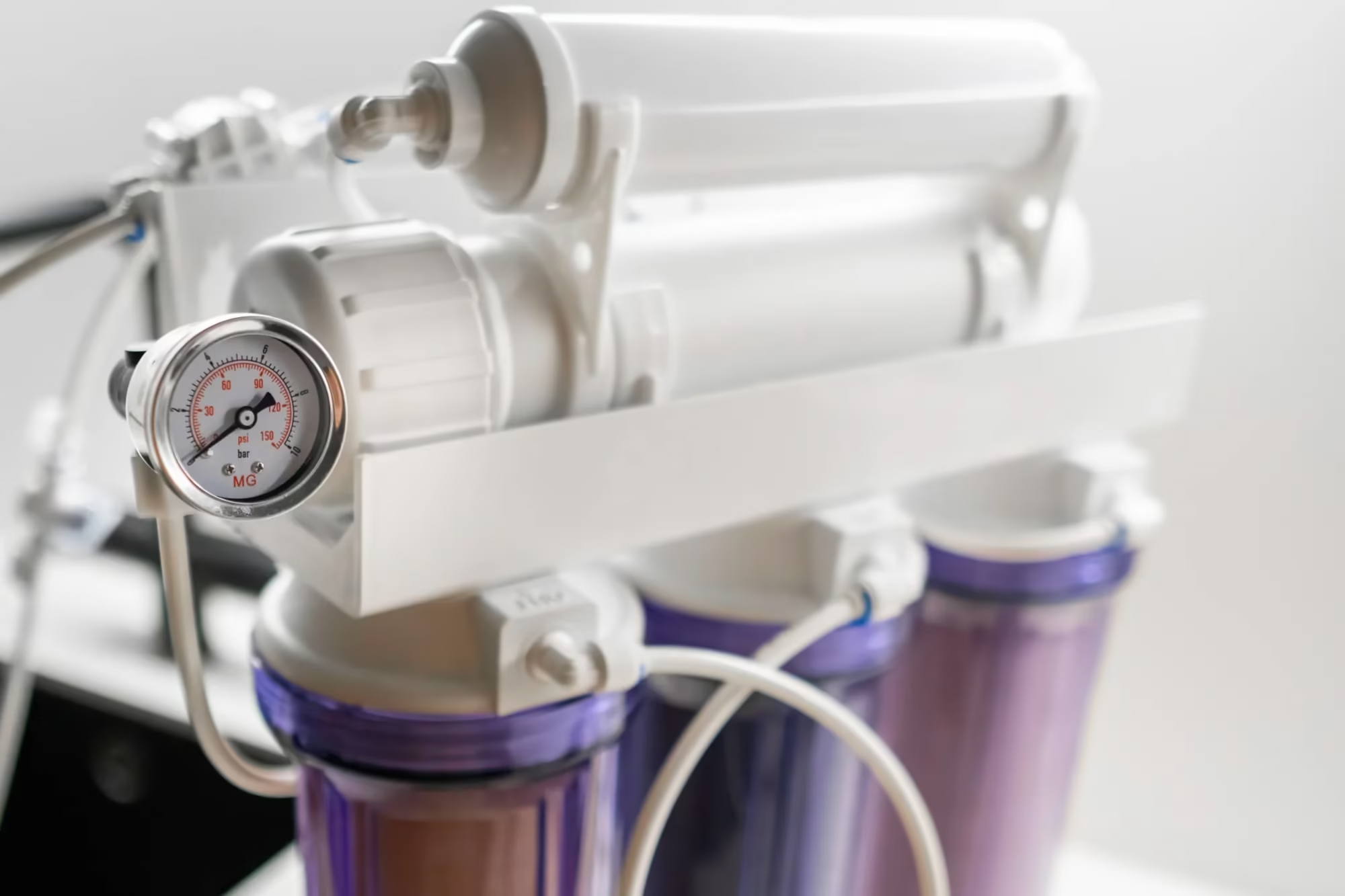
ECHOTec builds its marine watermaker systems to be diagnosed and serviced by the owner, not just a technician. That design philosophy starts with straightforward component layouts and pressure gauges that tell you what the system is actually doing.
Knowing what those readings mean, and what they look like when something is wrong, is the foundation of responsible watermaker ownership.
Warning Sign 1: Reduced Water Output
What normal production looks like
Every watermaker is rated for a specific gallons-per-hour or liters-per-hour output at a given operating pressure and feed water temperature. That number is your baseline. Note it when the system is new, and check it periodically against actual production.
A 30 GPH system that is producing 28 GPH after a year of use is worth monitoring. The same system producing 20 GPH is telling you something is wrong.
What a drop in GPH actually signals
Watermaker low output is one of the most common early indicators of a system problem. The likely causes depend on how the drop presents:
- Gradual decline over weeks: membrane fouling or scaling is the most common culprit
- Sudden drop: a blocked pre-filter, a partially closed valve, or a feed pump issue
- Output drops after a period of use then recovers: feed water temperature fluctuation or a pump running hot
In all cases, log the production rate before you investigate. A documented decline tells you how fast the problem is progressing and helps narrow the cause.
Warning Sign 2: Rising Operating Pressure
Normal pressure range for your system type
High-pressure operating range varies by system, but most marine reverse osmosis units run between 800 and 1,000 PSI in typical seawater conditions. Your system manual will list the expected range for your specific unit. That range is your reference point.
If you are not checking pressure regularly, start now. It is one of the most reliable indicators of system health.
What abnormally high pressure points to
A rising pressure reading while output stays flat or drops usually means the membrane is becoming harder to push water through. Common causes include:
- Membrane fouling from biological growth or particulate contamination
- Mineral scaling, particularly calcium carbonate in warmer or more mineral-rich waters
- Insufficient pre-filtration allowing sediment to reach the membrane
Catching this early, before the membrane is fully compromised, often means a cleaning cycle or pre-filter service can restore performance. Ignoring it means a reverse osmosis membrane replacement becomes unavoidable.
Warning Sign 3: Poor Water Quality or a Salty Taste in Product Water
The membrane’s role in product water quality
The high-pressure membrane is the core of any reverse osmosis watermaker. It rejects dissolved salts and passes clean water through to your tanks. When the membrane is functioning correctly, product water conductivity stays low, and taste is clean. When it begins to fail, salt rejection drops and you will notice the result.
A properly functioning marine watermaker typically produces water with a total dissolved solids (TDS) reading well below 500 ppm, often under 200 ppm. The EPA sets 500 ppm as the limit for acceptable drinking water. Anything approaching or exceeding that range from a watermaker that used to produce much lower readings is a clear signal that your membrane integrity is compromised.
How to confirm a membrane failure before replacing it
A TDS meter is one of the most useful diagnostic tools any boater can carry. They cost very little and tell you immediately whether product water quality has changed. Test your output when the system is new and record the number. Test it again monthly.
A sudden or progressive rise in TDS, especially accompanied by a salty taste, points to membrane failure. Before replacing the membrane, also check your O-rings and membrane housing connections. A failed O-ring can cause bypass, where some raw feed water skips the membrane entirely and enters the product line.
Warning Sign 4: Unusual Noise from the High-Pressure Pump
Sounds that indicate pump wear vs. a loose fitting
The high-pressure pump is the most mechanically active component in your watermaker. It is also one of the first to signal a problem through sound. Learn what your pump sounds like when it is running correctly, and you will recognize when something has changed.
Warning sounds to investigate:
- Knocking or rattling at low frequency: loose fittings, mounting hardware, or a failing pump valve
- High-pitched squealing: bearing wear or a dry-running pump
- Irregular pulsing that is louder than usual: worn piston seals or a partially blocked inlet
- Cavitation (a low, hollow knocking): insufficient feed water supply reaching the high-pressure pump
None of these sounds are normal. Each one points to a specific area worth inspecting before the noise becomes a failure.
Why ceramic plunger pump noise differs from other pump types
ECHOTec systems use ceramic plunger pumps, which are engineered for durability in harsh marine conditions. These pumps run quieter than cheaper diaphragm alternatives and tend to give more gradual warning signs when wear begins. A sudden dramatic sound change from a ceramic plunger pump is worth taking seriously immediately.
Warning Sign 5: Erratic or Climbing Motor Temperature
What heat buildup indicates in DC vs. AC systems
Motors in marine watermakers generate heat during normal operation, but that heat should stay within a predictable range. If you notice the motor housing feels unusually hot to the touch, or if your system has a temperature alarm and it is triggering, investigate before running another cycle.
In DC systems, excessive heat often points to:
- Voltage drop along a feed line that is undersized or corroded
- A motor working harder than it should due to excess backpressure
- A failing motor winding
In AC systems, heat buildup often relates to ventilation restrictions or a motor drawing more current than normal due to a mechanical load issue.
When to stop running and inspect
If motor temperature is climbing during normal operation and does not stabilize, shut the system down. Running a hot motor to completion risks a winding failure that turns a fixable problem into a full motor replacement.
Check the ventilation around the motor housing first, then check operating pressure. A motor working against higher-than-normal pressure is doing more work than it was designed for, and the heat is the result.
Warning Sign 6: Water in the Wrong Places
Common leak points and what they mean
Leaks in a watermaker system fall into two categories: low-pressure side leaks and high-pressure side leaks. Both matter, but high-pressure side leaks require faster action.
Common locations and what they indicate:
- Connections at the membrane housing end caps: O-ring wear or over-torqued fittings
- High-pressure hose connections: fitting corrosion or hose age
- Pump head connections: piston seal or valve wear
- Pre-filter housings: O-ring degradation from UV or age
A small drip at any of these points is a warning. Ignore it and the drip becomes a spray, which in a high-pressure circuit can be genuinely dangerous.
Quick field checks any owner can run
Run the system and watch the following while it is operating under pressure: all fittings, hose connections, and the membrane housing end caps. A flashlight and a dry rag are your best diagnostic tools. Wipe each connection dry, hold the rag against it for 30 seconds, and check for moisture. A connection that wets a dry rag under pressure is leaking.
This takes ten minutes and can catch a developing problem before it becomes a component failure or a safety issue. If you spot a leak, contact our watermaker refurbishment and troubleshooting team before your next offshore leg.
Warning Sign 7: Foul Smell or Biological Growth in Product Water
The role of pre-filters and carbon stages
Product water that smells off is one of the most unsettling watermaker problems because it directly affects the water you are drinking. The most common cause is biological growth somewhere in the system, usually in the pre-filter housing, the product water line, or the membrane housing itself.
This almost always traces back to two things: irregular flushing and a compromised pre-filter that lets biological material through.
A fresh water flush after every use is not optional on a marine watermaker. It pushes saltwater and any suspended biological material out of the system and prevents the growth conditions that create odor problems. A watermaker flush missed repeatedly will eventually produce water that is technically within salt rejection specs but smells like the inside of a bilge.
How a missed flush creates the problem
When a watermaker sits idle with seawater inside, biological growth begins within 24 to 48 hours in warm conditions. That growth colonizes the membrane surface and the product water side of the system. Once established, it is difficult to remove without a chemical cleaning cycle, and in advanced cases the membrane may need full replacement.
If your product water smells, start with a thorough flush and carbon filter check. If the smell persists after a fresh water flush cycle, a chemical cleaning or a new membrane may be necessary.
Warning Sign 8: The System Runs but Won’t Reach Operating Pressure
Feed pump issues vs. high-pressure pump issues
A watermaker that runs but never builds to operating pressure has a flow problem. The question is where in the circuit the problem originates.
The feed pump delivers low-pressure water to the high-pressure pump. If the feed pump is weak, undersized, or failing, the high-pressure pump is starved. It runs, but it cannot build pressure because it is not receiving adequate volume to work with. Signs of a feed pump problem include low inlet pressure readings and a high-pressure pump that sounds like it is cavitating.
If the feed pump is delivering adequately but pressure still will not build, the issue is likely inside the high-pressure pump itself: worn valves, worn piston seals, or a bypass condition where fluid is circulating internally rather than building pressure.
Diagnosing the difference without a technician
Check your inlet pressure gauge first. A healthy system shows a positive feed pressure reading before the high-pressure pump. If that reading is at or near zero, investigate the feed pump, the strainer, and the seacock. If feed pressure is normal but high pressure will not build, the issue is in the pump head itself, and this is the point to contact ECHOTec’s watermaker repair and replacement services for the next step.
What to Do When You Spot a Warning Sign
Stop or keep running? A decision framework
Not every warning sign requires shutting the system down immediately. Here is a practical framework:
Stop running now if you notice:
- A high-pressure side leak
- A motor that is climbing in temperature without stabilizing
- A loud mechanical sound from the pump that is new and worsening
- Zero or near-zero output with no obvious feedwater cause
Continue with caution and investigate if you notice:
- A gradual output decline over several weeks
- A slight rise in TDS readings
- A new smell that appeared after a missed flush cycle
When in doubt, stop, diagnose, and run a fresh water flush. A system that is shut down early is far easier and less expensive to repair than one that has been pushed to full failure.
ECHOTec parts support and when to call
ECHOTec provides worldwide parts support for all systems, which means the components you need to address the most common issues are accessible regardless of where you are cruising. For the situations that go beyond what you can manage in the field, our team is available to help you diagnose remotely and determine whether a watermaker repair and replacement or a professional installation and service visit is the right path forward.
The watermaker built right should last for years with routine attention. But routine attention starts with knowing what to watch for.
If you are seeing any of these warning signs and want a second opinion, visit echotecwatermakers.com or reach out directly at sales@echotecwatermakers.com. We would rather help you catch a problem early than hear about it after a passage.
Frequently Asked Questions
How do I troubleshoot a watermaker that has stopped producing water?
Start with the basics: check that the seacock is open, the pre-filter is not clogged, and the feed pump is running. If those check out, look at inlet pressure. A reading at or near zero points to a feed side issue. If inlet pressure is normal but the high-pressure pump will not build to operating range, the problem is likely inside the pump head itself, such as a worn valve or piston seal.
How long do watermaker membranes last?
Under normal conditions and with regular flushing, a reverse osmosis membrane in a marine watermaker typically lasts between one and three years. Membranes used in warmer, more biologically active waters or operated without consistent flushing may need replacement sooner. Monitoring your TDS output and operating pressure over time is the most reliable way to track membrane condition.
Why is my watermaker not making enough water?
Watermaker low output has several common causes: a fouled or scaled membrane, a clogged pre-filter, a weak feed pump, or a partially closed valve in the feed circuit. Start by replacing the pre-filter and running a fresh flush. If output does not recover, check operating pressure against your system’s rated range. A pressure that is higher than normal with low output usually points to the membrane.
What does it mean when my watermaker pressure is too high?
High operating pressure with reduced or flat output typically indicates the membrane is fouled or scaled and is becoming harder to push water through. In some cases, it can also signal a restriction in the product water outlet. A membrane cleaning cycle may recover performance in early-stage fouling. If pressure remains elevated after cleaning, a membrane replacement is usually the next step.
How often should I flush my boat watermaker?
Fresh water flush after every use is the standard recommendation for marine watermakers. If the system will sit unused for more than a few days, a flush before and after the idle period is good practice. In warm tropical waters, biological growth in an idle system can begin within 24 hours, so consistent flushing is one of the most important maintenance habits an owner can build.
Can I repair my watermaker myself or do I need a technician?
Many common boat watermaker repair tasks are owner-serviceable: pre-filter replacement, O-ring swaps, fresh water flush cycles, and basic pressure checks. ECHOTec systems are specifically engineered for straightforward owner servicing in the field. For pump head work, membrane replacement, or electrical faults in AC systems, having the right guidance matters. ECHOTec’s worldwide parts support and remote diagnostic help mean you are not alone even when you are far from a service center.