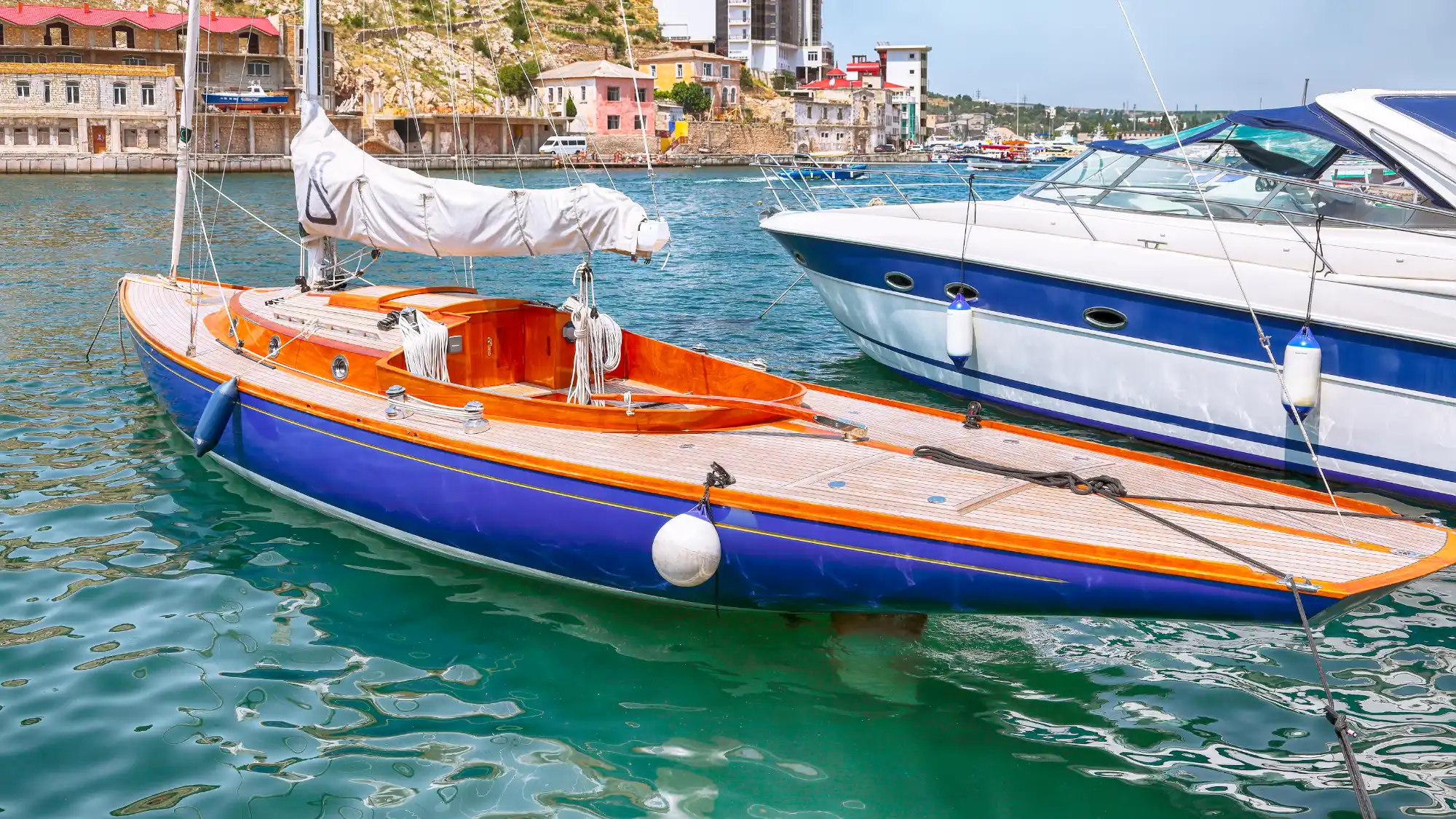
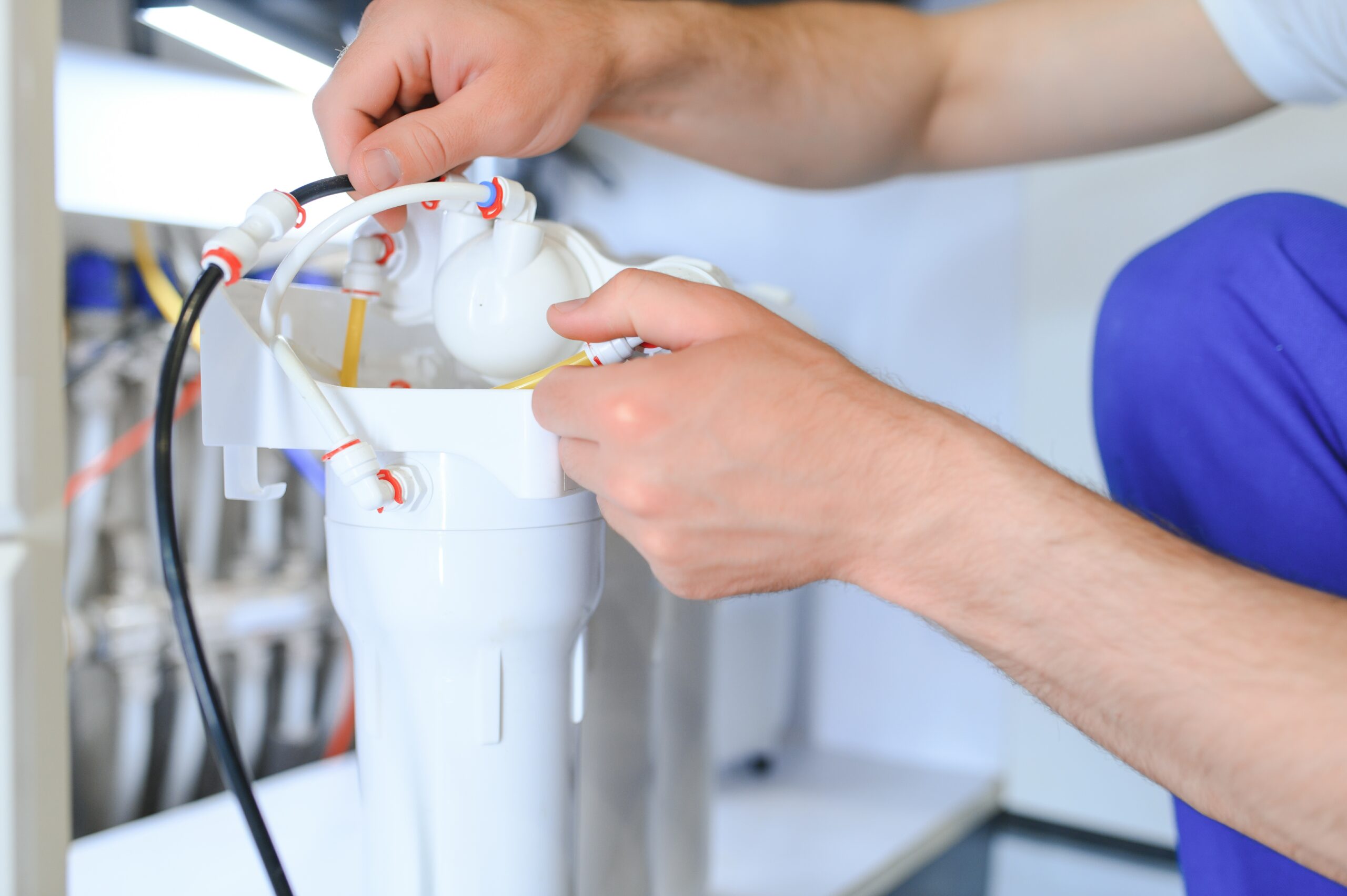
Where you place a reverse osmosis watermaker for boats matters as much as which unit you choose. The right position keeps your system running reliably, makes servicing easy, and protects your investment long term. The wrong position causes vibration problems, heat damage, and maintenance headaches. This guide provides key onboard watermaker placement tips for both sailboats and powerboats, ensuring you get it right the first time.
Why Placement Matters
Marine watermakers for boats include several components: high-pressure pumps, RO membranes, pre-filter housings, pressure vessels, and a control panel. Each one needs a proper home aboard your vessel.
Good placement means clean product water, easy access for filter changes, and a system you can maintain yourself. Poor placement means costly repairs and a short membrane life.
ECHOTec builds its systems in modular configurations so you can fit them into almost any layout, because no two boats are the same.
Sailboat Installations
Boat watermaker space requirements are most demanding on sailboats. Storage is tight, and the boat heels underway, which affects every part of the installation.
Keep the system away from heat. The engine compartment seems like a convenient spot, as the seawater plumbing is already there. But engine heat shortens the RO membrane life significantly. Choose a well-ventilated locker instead, with enough clearance to remove filters and service the membranes without difficulty.
If no single compartment is large enough, ECHOTec’s modular systems let you split components across multiple spaces. This is a practical solution on boats where water tanks, fuel systems, and structural frames compete for space.
Account for heel. The intake through-hull must stay below the waterline when the boat heels to its normal sailing angle, typically 10 to 20 degrees. If air enters the high-pressure pump, it causes immediate damage. Place the intake on the centerline or low side of the hull, and fit a dedicated seacock so you can isolate it quickly.
Match the system to your power supply. Most cruising sailors charge their batteries using solar or wind. Energy consumption adds up fast. A 24V system draws fewer amps than a 12V system for the same output, which makes a real difference when your daily energy budget is limited. ECHOTec offers both options, and their team can help you match the system to your charging setup before you buy.
Reduce vibration at the mount. Fit anti-vibration mounts under the high-pressure pump. This cuts noise inside the boat and reduces stress on the hull structure over the long term, especially important if you run your watermaker system at anchor regularly.
Powerboat Installations
A powerboat desalination system has more space to work with and fewer power constraints. But there are still important decisions to make.
Manage heat in the engine room. The engine room is the natural location for a marine desalination system installation on a powerboat. Raw water plumbing and electrical runs are close by, which keeps the installation tidy. Position membrane housings away from exhaust manifolds and make sure the space has enough airflow to protect the ro membranes from heat damage.
Use your power advantage. Powerboats typically run high-output alternators or a generator, so energy efficiency is less of a constraint. Liveaboards and long-range cruisers can comfortably run systems that produce 15 to 30 gallons per hour, enough fresh water for showers, cooking, and rinsing gear without any rationing.
Consider how your hull behaves at speed. On planing hulls, intakes placed too far aft pull in aerated water at speed. This causes the pump to cavitate and can damage the system. Place the intake further forward and lower on the hull. Alternatively, run the system only when anchored or idling, a common approach that avoids the problem entirely.
Plan for easy access. Larger engine rooms make it tempting to tuck the system into a corner and move on. Build in enough clearance to change the pre-filter, inspect pressure vessels, and read the control panel without moving surrounding equipment. Systems that are easy to reach get properly maintained. Systems that are not get ignored.
Placement Tips for Every Vessel
These principles apply whether you install a watermaker on a sailboat or a powerboat.
Protect your membranes with proper pre-filtration. A two-stage pre-filter, 20-micron followed by 5-micron, removes particles before they reach the pump. Skipping this step is the most common cause of early osmosis membrane failure. Change filters on schedule. The cost is small compared to replacing membranes.
Use a dedicated intake. Never tee off an existing engine cooling line. A separate seacock with its own strainer lets you isolate the watermaker system for service or when you enter turbid or polluted salt water.
Discharge brine below the waterline. Keep the outlet well away from the intake to prevent concentrated salt water from recirculating, particularly in marinas where water circulation is limited. A below-waterline position also prevents staining on the hull sides.
Mount the control panel where you can see it. Put it at eye level in or near the cabin. ECHOTec panels show system status clearly, so you can check on systems running without climbing into the bilge.
Pressure vessels can be installed horizontally or vertically, depending on the space available. ECHOTec systems are designed to perform reliably in either orientation, so you are not limited by layout constraints when planning your installation. Choose the position that gives you the best access for membrane removal and servicing, and work around your existing equipment from there.
Choosing the Right Output
For cruising sailboats, a system producing 8 to 15 gallons per hour fills water tanks comfortably for a small crew when you run it 1 to 3 hours each day. For powerboats and liveaboards, a 15 to 30 gallon-per-hour system delivers full water independence.
ECHOTec’s team can help you calculate the right size based on your crew, your usage, and your available space.
Why ECHOTec
ECHOTec watermakers are installed on more than 5,000 vessels worldwide. Every system meets NEMA, ASTM, API, NSF, and BSI international standards. The controls are clear. The components are logically laid out. You can install a watermaker, change filters, and remove salt from seawater yourself, without needing a technician on call.
That matters most when you’re far from the nearest marina.
Conclusion
Good placement decisions protect your system, extend membrane life, and make maintenance simple. Assess your space, calculate your energy budget, and plan your intake and brine discharge positions before you commit to a location. The best watermaker for cruising sailboat or powerboat use is the one that fits your vessel properly and keeps producing clean drinking water season after season.
Contact ECHOTec Watermakers to find the right system for your vessel.