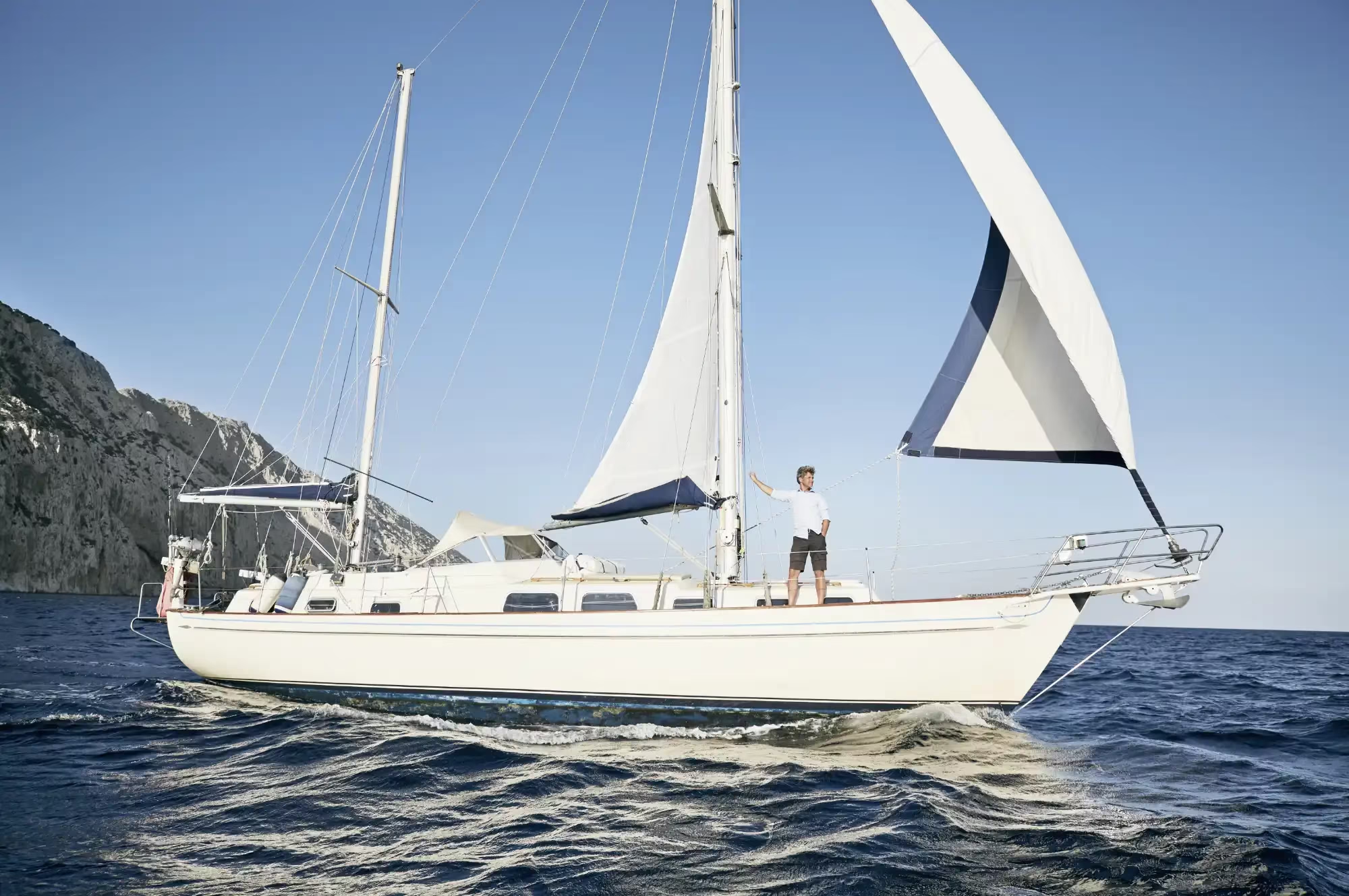
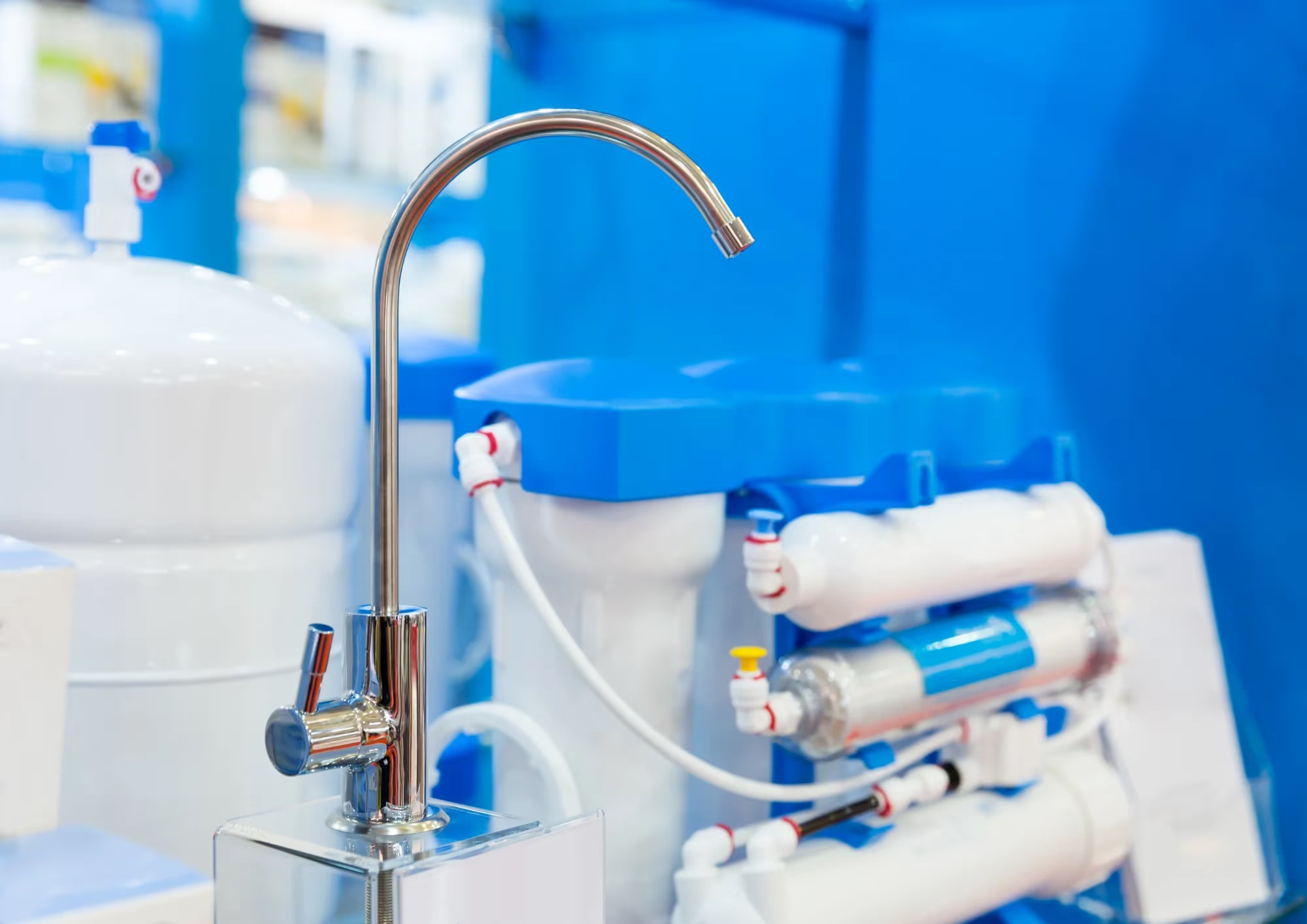
When you are 400 miles from the nearest port, your watermaker is not a convenience. It is your water supply. For coastal day sailing, a system failure is an inconvenience. You motor back, you solve the problem, and you move on. On a long offshore passage, the math changes completely.
Watermakers for boats get talked about in terms of output, power consumption, and price. Those things matter. But experienced bluewater sailors will tell you what matters most is something harder to put on a spec sheet: will it still be working on day twelve, in rough seas, with no technician within five hundred miles?
This post breaks down what separates a reliable offshore watermaker from a system that looks good at the dock but lets you down mid-ocean. If you are planning a bluewater passage or you want to understand why design philosophy matters more than marketing language, keep reading.
What Makes an Offshore Passage Different from Coastal Boating
Most boaters spend their time within a reasonable distance of shore. Their watermaker works in calm conditions, gets used occasionally, and sits idle between trips. That is not offshore sailing.
The Distance Factor
An offshore passage changes your relationship with every piece of gear on the boat. There is no running to the chandlery. There is no calling a technician. If something breaks, you either fix it yourself or you go without. For water, going without is not an option.
The offshore passage planning reality is that crews on extended passages need between two and four liters of drinking water per person per day at minimum, and significantly more for cooking and basic hygiene. A boat with a crew of four needs a consistent, reliable water source across days or weeks of sailing. Your watermaker is not a backup. It is the primary system.
Motion, Vibration, and Salt Exposure at Sea
A boat sitting at anchor experiences almost none of the stresses a passage boat does. At sea, your watermaker is subject to constant vibration, repeated shock loads from waves, temperature swings, and salt exposure at a level that simply does not exist dockside.
Components that hold up fine in flat water start to show weakness offshore. Fittings loosen. Connections corrode. Membranes that were not properly flushed after the last use start to scale. Systems with complex electronics are particularly vulnerable to moisture intrusion and vibration fatigue.
Why Coastal-Duty Systems Fall Short Offshore
There is a category of watermaker built for coastal use: systems designed for a marina liveaboard who runs it daily in calm conditions and has access to service. Those systems are not wrong for their intended use. They are wrong when you take them offshore and expect them to perform like bluewater gear.
The difference comes down to component quality, design simplicity, and what happens when something does go wrong. Coastal-duty systems are often built to a price point. Offshore gear is built to a standard.
The Most Common Ways Watermakers Fail at Sea
Understanding failure modes is the first step to choosing a system that avoids them. In our experience at ECHOTec, the customers who come to us after a competitor system failed almost always report one of three things.
Complex Electronics in Marine Environments
Electronics and saltwater have a complicated relationship. Modern watermakers have increasingly moved toward controller boards, digital displays, and automated system management. On paper, that sounds like progress. In practice, it creates more failure points in an environment that is hard on electronics.
Salt air corrodes connections. Vibration works components loose. Moisture finds its way into sealed enclosures over time. A controller board failure at sea does not just mean your watermaker stops working. It can mean you cannot diagnose the problem, cannot source a replacement part, and cannot get the system running again without tools and knowledge most sailors do not carry.
Energy Recovery Systems That Sound Good on Paper
Energy recovery technology is marketed as an efficiency gain. In the right context, with the right application, that claim has some merit. But energy recovery systems add mechanical complexity to a device that operates in a harsh marine environment. More complexity means more potential failure points.
The boaters who have switched to ECHOTec after competitor failures frequently cite energy recovery system failures as the trigger. The systems are sophisticated. They are also, in remote conditions, very difficult to repair.
Maintenance Issues That Compound Far from Port
A watermaker that was not properly flushed before a passage, or that has a pre-filter that was overdue for replacement, will perform poorly the moment you need it most. Maintenance issues that are minor at the dock become serious problems offshore.
The compounding effect is real. A fouled membrane reduces output. Reduced output means running the system longer. Running the system longer strains other components. What started as a missed flush becomes a membrane that cannot produce enough water for the crew.
What a Reliable Offshore Watermaker Actually Looks Like
Reliability is not a feature. It is the result of design choices made before the system ever shipped.
Component Quality Over Feature Lists
The brands that build reliable offshore watermakers are not always the ones with the longest feature lists. They are the ones that use high-quality, corrosion-resistant components throughout, select materials that hold up in tropical and high-salinity environments, and engineer systems that can be serviced by the person who owns them.
NSF-certified water system components are one signal of quality worth looking for. Certifications like NEMA, ASTM, API, and BSI are another. They indicate that the materials and construction methods have been tested against documented standards, not just internal benchmarks.
Ceramic Plunger Pumps: Why They Outlast Alternatives
ECHOTec uses ceramic plunger pumps across our systems. This is a deliberate choice, not a cost constraint. Ceramic plunger pumps are more durable in saltwater environments than stainless or brass alternatives. They hold up to the pressure cycling that high-output watermakers experience on long passages. They are also simpler to inspect and, when necessary, to service.
Across more than 40 million collective operating hours logged by ECHOTec AML/S Series systems since 1997, this approach has proven itself in conditions ranging from Caribbean cruising to Pacific crossings.
Simple Systems That Any Boat Owner Can Troubleshoot
If your watermaker fails offshore and you cannot diagnose the problem with basic tools and knowledge, you are in trouble. That is not a comfortable position to be in. ECHOTec systems are engineered for straightforward operation and accessible troubleshooting. There are no proprietary diagnostic tools required. No call center needs to remote into your system. If something goes wrong, a competent boat owner can work through it.
That is not an accident. It is the design philosophy.
How to Size a Watermaker for an Offshore Passage
Choosing the right output for your needs is as important as choosing the right system.
Calculating Daily Water Needs for Crew
Start with daily fresh water requirements: a minimum of two liters per person per day for drinking, and roughly five to ten liters per person per day when cooking and hygiene are included. A crew of four on a two-week passage needs a system capable of producing enough water daily to meet that demand without running the system for impractical lengths of time.
Most offshore cruisers find a system producing 12 to 25 gallons per hour sufficient for a crew of two to four. Larger crews or vessels with greater onboard water use should size up accordingly.
Output vs. Power Consumption Tradeoffs
Higher output usually means higher power draw. On a passage boat relying on solar, wind, or engine charging, this tradeoff matters. A DC watermaker running on 12, 24, or 48 volts gives you flexibility to produce water while sailing without running the engine. That is a real operational advantage on a long passage.
The tradeoff is output per hour versus power consumed. Work through the numbers before you choose a system, not after.
DC vs. AC Options for Long-Passage Sailors
For most sailboats doing offshore work, a DC watermaker setup for boats is the practical choice. DC systems can be run from the house battery bank while underway, powered by solar or wind generation, without firing the engine. AC systems produce higher output and are better suited to motor yachts or vessels with robust generator capacity.
If your passage involves extended periods of sailing without engine use, a DC system gives you more operational flexibility. If you have consistent generator power available, an AC system’s higher output may justify the choice.
Why ECHOTec Is Engineered Specifically for Offshore Conditions
ECHOTec was built by people who understood what breaks at sea. That context shapes every design decision we make.
40 Million Operating Hours: What That Means for You
The ECHOTec AML/S Series has logged over 40 million collective real-world operating hours since launching in 1997. With more than 5,000 units deployed worldwide, the product has been tested across more operating environments than most competitors will ever see.
That track record is not marketing. It is evidence that the design works under conditions that eliminate lesser systems.
Built to Perform Without a Technician Nearby
Our systems are engineered to be installed, operated, and maintained by the person who owns them. We do not design for the assumption that a service technician will be available when something needs attention. We design for the reality that most of our customers are offshore, remote, or operating in locations where outside support is not coming quickly.
That means simpler architecture, accessible components, and systems that communicate problems in ways a boat owner can actually act on.
Worldwide Parts Support When You Need It
When a part needs replacing, you need to be able to get it. ECHOTec maintains global parts availability across our ECHOTec marine watermaker systems. From the Caribbean to the Pacific, customers have been able to source what they need and keep their systems running.
For offshore sailors, that global supply chain is not a nice-to-have. It is part of what makes a watermaker genuinely reliable.
What Offshore Sailors Learn the Hard Way
The pattern ECHOTec sees repeatedly from customers who switched from other brands is consistent. A system that worked fine at the dock, or on a coastal weekend trip, revealed its limitations on the first serious offshore passage. Complex controllers that failed in humidity. Energy recovery components that could not be sourced in the Caribbean. Systems that needed a laptop to diagnose.
The offshore environment does not care about marketing claims. It cares about whether the components hold up, whether the design is sound, and whether the person on board can keep it running without outside help.
ECHOTec watermaker repair and support exists because we stand behind what we sell after the sale. But the goal is always to build a system that does not need us to ride along.
The Bottom Line on Watermakers for Boats Going Offshore
Choosing a watermaker for offshore sailing is a different decision than choosing one for marina use. The distance, the conditions, and the consequences of failure are not comparable.
Watermakers for boats doing serious offshore work need to be built from quality components, designed with simplicity in mind, and supported by a team that understands what happens when things go wrong 500 miles from shore.
ECHOTec builds for that reality. If you are planning a passage and want to talk through what system fits your vessel and itinerary, reach out at kross@echotecwatermakers.com or visit echotecwatermakers.com to explore the full range.
Frequently Asked Questions
What size watermaker do I need for a long offshore passage?
A crew of two typically needs a system producing 8 to 15 gallons per hour. A crew of four should look at 15 to 25 gallons per hour. Factor in your daily water use for drinking, cooking, and hygiene, and size the system so you can meet that demand in a reasonable daily run time. Most offshore sailors aim for a system they can run for two to four hours per day.
Are DC watermakers reliable enough for bluewater cruising?
Yes. A quality DC marine watermaker running on 12, 24 or 48 volts is well-suited for bluewater passages. The key is choosing a system built from high-quality components with a proven track record in offshore conditions. ECHOTec DC systems have been used on Pacific and Atlantic crossings. The operational advantage of running off your battery bank without the engine is significant on a long passage.
How often does a boat watermaker need maintenance on a long offshore passage?
At minimum, your watermaker for sailboat use should be flushed after every use with fresh water if you are in port, and run regularly enough while at sea that membranes stay active and do not dry out or scale. Pre-filters should be checked every few days in high-turbidity conditions. A simple daily check for leaks and pressure consistency takes less than five minutes and catches most problems before they develop.
What is the biggest risk of watermaker failure at sea?
The most common failures come from membrane scaling due to missed flushing procedures, pre-filter blockages that restrict flow and strain the high-pressure pump, and electronic controller failures from moisture or vibration. Choosing a system with fewer electronic dependencies and maintaining a simple flush and inspection routine eliminates the majority of these risks.
Can I run a watermaker on solar power offshore?
Yes, and many offshore sailors do. A solar-powered watermaker system paired with adequate solar panel capacity allows you to produce fresh water while sailing, without running the engine. The trade-off is that solar output varies with conditions, so you need to account for cloudy days and higher demand periods in your power budget.