Coastal living offers many advantages: beautiful views, proximity to the water, and a lifestyle connected to the sea. It also brings one consistent challenge that mainland properties rarely face: reliable, affordable access to quality fresh water. Whether you are on a barrier island, a remote coastal property, an off-grid retreat, or simply in a region where municipal water quality falls short, a home desalination system offers an independent solution.
ECHOTec Watermakers designs and builds residential and light commercial desalination systems for exactly these applications. Before investing, several important planning considerations will determine whether your installation delivers the freshwater independence you are looking for.
Is a Home Desalination System Right for Your Property?
Not every coastal property is an ideal candidate for a home desalination system. The first step in planning is an honest assessment of your situation.
Water Source Availability
A home desalination system using reverse osmosis technology requires access to a saline or brackish water source. For oceanfront and waterfront properties, this typically means a well drilled into the water table to access brackish groundwater, a direct ocean intake, or access to a tidal creek or estuary. Properties without a practical feedwater source require alternative approaches such as rainwater harvesting combined with filtration, or connection to municipal water with additional in-home purification.
Property Zoning and Permitting
In many coastal jurisdictions, installing a saltwater intake or a brine discharge system requires environmental permits. Brine concentrate from a reverse osmosis system must be disposed of responsibly. For ocean-facing properties, returning concentrate to the sea is the simplest approach and is generally permitted at residential scales when concentrated brine is discharged below the waterline with adequate dilution flow. Research your local regulations before committing to a system design.
Daily Water Demand
A realistic assessment of your household’s daily water consumption guides the selection of the right system capacity. A typical household of four uses 400 to 600 liters of fresh water per day for drinking, cooking, bathing, laundry, and irrigation. Not all of this water needs to be desalinated. Many homeowners use desalination for drinking and cooking water only, running a smaller, more economical system alongside collected rainwater or other sources for non-potable uses.
Understanding Home Desalination System Types
Under-Counter RO Systems
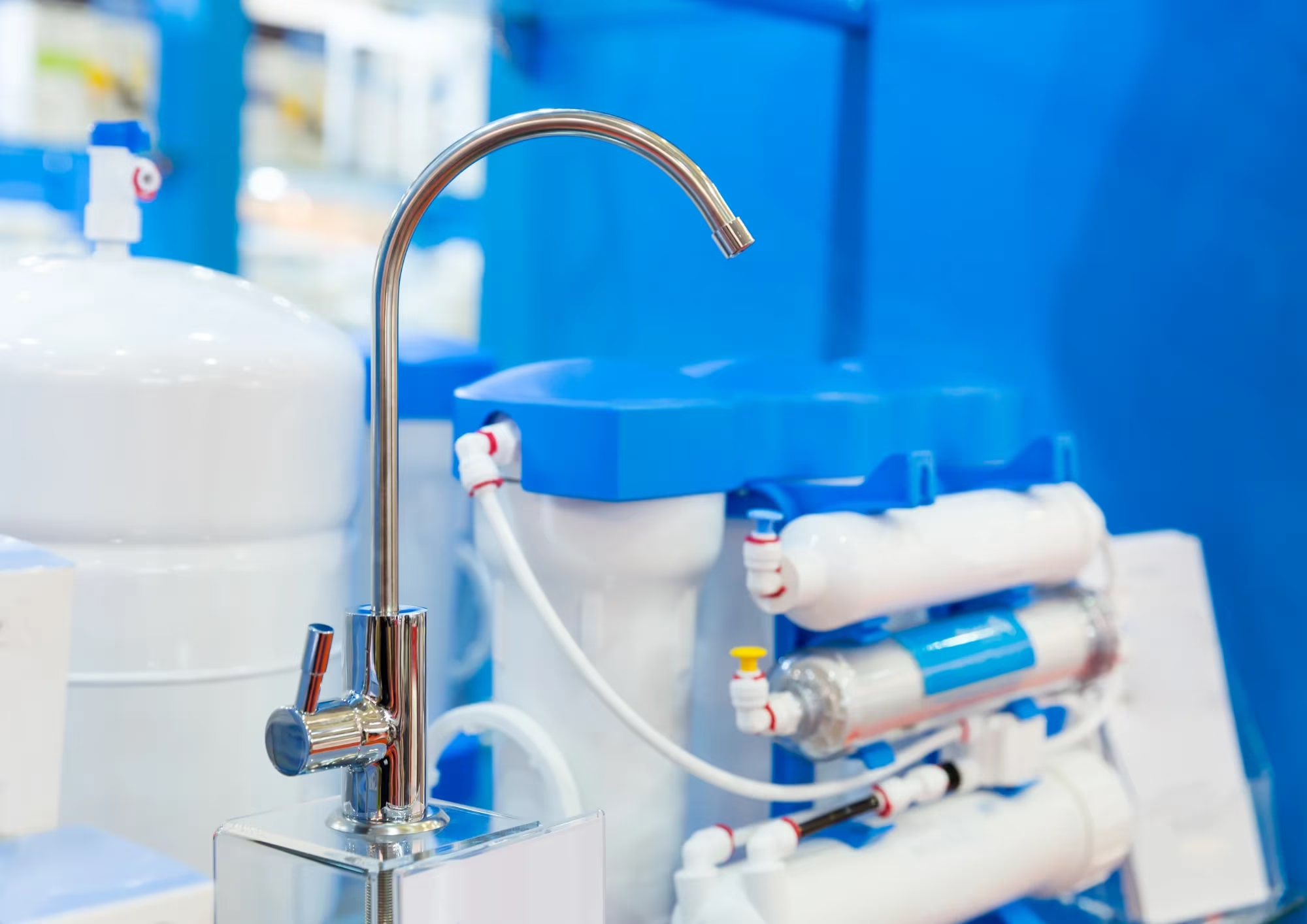
Small under-counter reverse osmosis systems produce drinking-quality water from a tap-connected supply. These systems are appropriate when municipal or well water simply needs additional purification rather than full desalination from seawater. They are not suitable as standalone solutions for saltwater desalination without a pre-treatment system to handle the high salt load and biological content of raw seawater.
Residential Desalination Systems
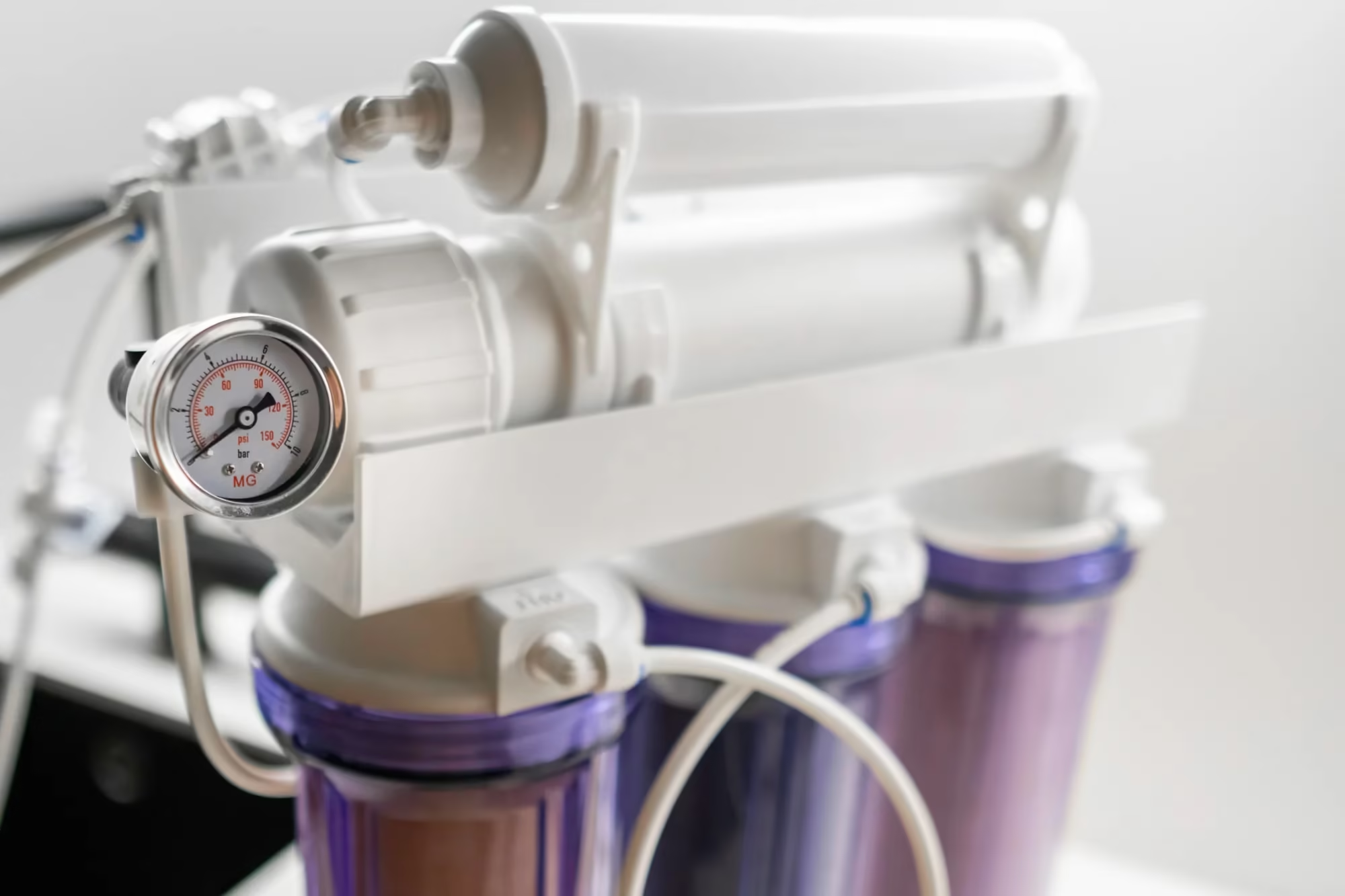
ECHOTec’s residential desalination systems are engineered for whole-house or high-volume production from seawater and brackish water sources. These systems include commercial-grade high-pressure pumps, large-format RO membrane housings, multi-stage pre-filtration, and production capacities ranging from several hundred liters to thousands of liters per day. For a coastal property seeking genuine freshwater independence, a purpose-built residential system is the appropriate solution. Explore ECHOTec’s home and land-based desalination options to understand available configurations.
Off-Grid Solar-Powered Residential Systems
For remote properties without reliable grid power, a solar-powered home desalination system offers complete independence from both the water utility and the electrical grid. ECHOTec’s DC-compatible systems integrate with standard off-grid solar systems to produce fresh water during daylight hours, storing production in a freshwater tank for 24-hour household availability.
Pre-Installation Planning Checklist
Getting the most from a home desalination system investment requires careful pre-installation planning. Work through each of these considerations before specifying your system.
Feedwater Quality Analysis
Have your feedwater source tested by a certified water quality laboratory before designing your system. Salinity, turbidity, biological load, iron content, and the presence of hydrocarbons or agricultural runoff all affect system design. High-iron groundwater requires specialized pre-treatment to protect the RO membrane. Biologically active water from estuaries or inshore areas may require UV disinfection or chemical dosing upstream of the membrane.
System Location and Space
Home desalination systems require a dedicated installation space with adequate ventilation, drainage for brine discharge and maintenance flushing, and proximity to both the feedwater intake and the freshwater storage tank. A garage, utility room, or dedicated pump house is the typical installation location. The system needs clearance for maintenance access on all serviceable components.
Electrical Supply
Larger residential desalination systems require a dedicated electrical circuit with appropriate amperage. Confirm that your electrical panel has capacity for the additional load, and have a licensed electrician review the installation plan before proceeding. For off-grid solar systems, coordinate the watermaker’s power requirements with your solar array and battery bank design to ensure adequate production capacity.
Freshwater Storage
A properly sized freshwater storage tank buffers the watermaker’s intermittent production against the household’s continuous demand. A storage capacity of two to three days of household consumption provides a comfortable buffer for system downtime due to maintenance, power interruptions, or feedwater quality events. Food-grade polyethylene tanks are the standard choice for residential freshwater storage.
Operating Costs for a Home Desalination System
Understanding the ongoing operating costs of a home desalination system helps evaluate the economics relative to purchasing municipal water or trucking water to the property.
Energy Consumption
Reverse osmosis desalination is an energy-intensive process. A residential ECHOTec system producing 500 liters per day will consume several kilowatt-hours of electricity per day, depending on the system design and feedwater salinity. For grid-connected properties, this cost is easily calculated at your local electricity rate. For solar-powered installations, the energy cost is effectively zero after the capital investment in the solar array.
Consumable Replacement
Pre-filter cartridges are the primary ongoing consumable expense. Depending on feedwater quality and production volume, cartridges may need replacement monthly to quarterly. RO membrane replacement is a periodic major cost, typically every three to five years under normal conditions. ECHOTec provides a full range of replacement parts and consumables through the ECHOTec parts and accessories page, with worldwide delivery support.
Maintenance and Servicing
Annual professional servicing keeps a home desalination system operating at peak efficiency and extends the life of the high-pressure pump and membrane. ECHOTec offers installation and ongoing service support through its Florida and Caribbean operations, and can connect customers with qualified service technicians in other regions.
The Long-Term Value of Freshwater Independence
For the right property and owner, a home desalination system transitions from a capital expense to a fundamental part of how the property works. Coastal properties in water-scarce regions, remote islands, and off-grid retreats gain a utility infrastructure that adds tangible value to the property itself. The peace of mind that comes from knowing your family’s fresh water supply is independent of external sources, weather events that disrupt municipal water systems, and water trucking logistics is something that ECHOTec customers cite consistently as the most valued outcome of their investment.
Frequently Asked Questions
How much does a home desalination system cost to install?
The cost of a home desalination system installation varies significantly based on production capacity, feedwater source characteristics, site-specific installation requirements, and pre-treatment needs. A basic residential system suitable for drinking and cooking water production is considerably less expensive than a whole-house system covering all household demand. ECHOTec recommends requesting a custom assessment to receive accurate cost estimates for your specific situation, taking into account both equipment and installation requirements.
Can I install a home desalination system myself?
The watermaker unit itself can be installed by a competent DIY homeowner with plumbing and basic electrical skills. However, the feedwater intake, brine discharge, and electrical connections may require licensed contractors depending on your local regulations. ECHOTec strongly recommends professional installation of the high-pressure pump and membrane components to ensure proper performance and warranty coverage. Contact ECHOTec’s service team to discuss installation support options.
How long do RO membranes last in a home desalination system?
Under normal operating conditions with proper pre-filtration and regular maintenance, RO membranes in a residential desalination system typically last three to five years before requiring replacement. Membrane life is heavily influenced by feedwater quality, operating frequency, and adherence to maintenance procedures, including regular flushing and proper storage protocols during extended periods of non-use.
What happens to the salt water rejected by the desalination system?
The concentrated brine produced by reverse osmosis desalination must be responsibly returned to the environment. For oceanfront properties, the standard approach is gravity discharge or pumped return to the sea below the waterline with adequate dispersion. For inland or estuarine properties, brine disposal must be designed in consultation with local environmental authorities. ECHOTec’s installation team guides customers through compliant brine disposal options as part of the system design process.