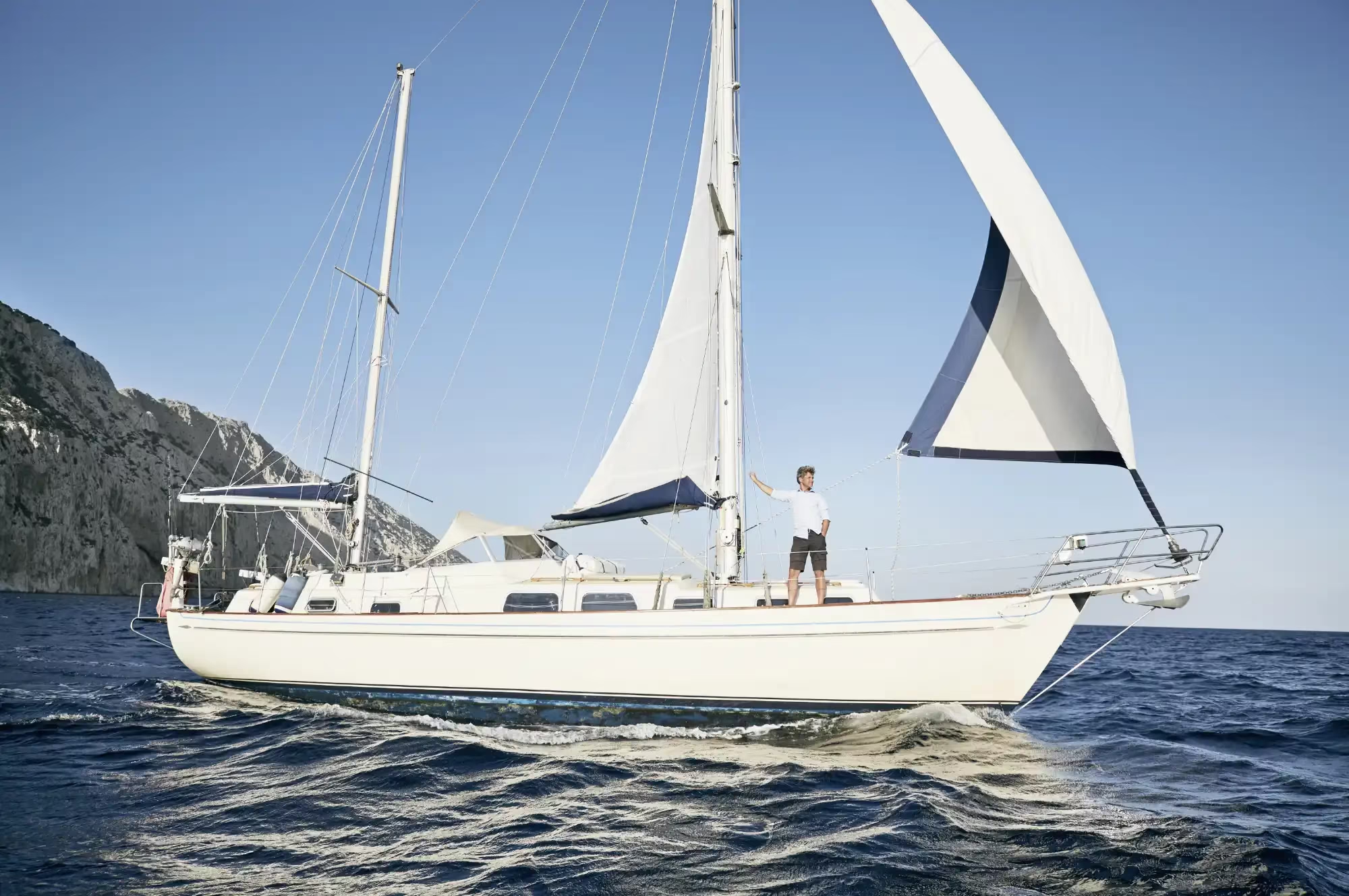
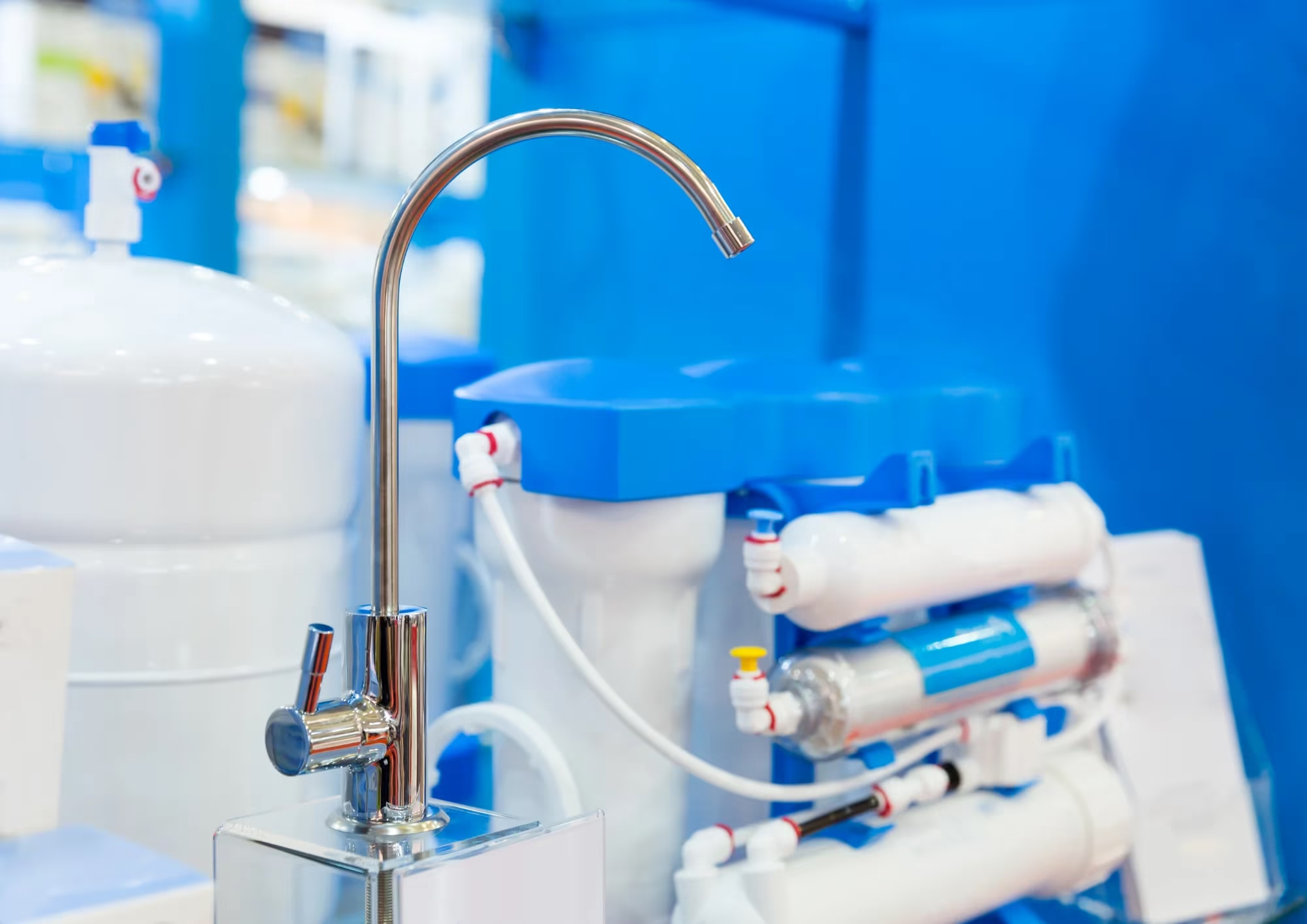
A bluewater cruising yacht is a self-contained system. The decisions made in the design and commissioning phase determine whether long passages are comfortable and confident, or stressful and constrained. Water is fundamental to everything aboard: cooking, washing, crew health, and morale on extended passages where the nearest marina may be two weeks away. The right yacht watermaker transforms long-distance sailing from a test of endurance into the adventure it should be.
ECHOTec Watermakers builds systems for everything from compact cruising boats to 60-foot passage-making yachts and commercial charter vessels. This guide is for yacht owners making a serious watermaker selection decision, whether for a new build or a refit.
Understanding Your Yacht’s Daily Water Demand
Before selecting a watermaker model, establish an honest estimate of your vessel’s daily water consumption under realistic operating conditions. Theoretical minimums rarely reflect actual usage.
Crew Size and Lifestyle
A serious cruising couple practicing conservation might use 20 to 30 liters per day on passage. The same couple living comfortably with regular showers, galley cooking, and occasional boat washing might use 60 to 80 liters. A charter crew of six living at resort standards can easily exceed 200 liters per day. Your yacht’s watermaker needs to cover your realistic demand with capacity to spare.
Building in Production Margin
Select a watermaker capable of meeting your peak daily demand in half the available running time. This approach gives you flexibility to run the system when power is available rather than being locked into long daily production cycles, and provides reserve capacity for equipment inefficiency as components age over time.
Choosing Between AC and DC Watermakers for Yachts
Yachts large enough to warrant serious watermaker installations typically have both AC and DC electrical systems. The choice between AC and DC watermaker types involves practical trade-offs that depend on your electrical architecture and operational preferences.
AC Watermakers on Larger Yachts
AC-powered watermakers draw from the vessel’s 110V or 220V AC bus, fed by either a generator or an inverter. On a yacht that runs a generator regularly for air conditioning, battery charging, or high-power cooking appliances, an AC watermaker integrates naturally into that operational pattern. AC motors offer excellent long-term reliability and are available in higher power ratings suitable for production capacities above 100 liters per hour. Explore ECHOTec’s AC watermaker line for specifications suited to larger vessel installations.
DC Watermakers on Voyaging Yachts
DC watermakers are favored by passage-making yachts that minimize generator runtime and rely primarily on solar, wind, and alternator charging. A high-quality DC unit from ECHOTec’s range can produce 40 to 80 liters per hour at modest amp draw, providing substantial daily water production during engine charging cycles without the need to run a generator. For yachts emphasizing fuel economy and silent operation, a DC watermaker is the natural choice. Review the full ECHOTec DC watermaker specifications to find suitable models for larger vessels.
Installation Design for a Yacht Watermaker System
Installation quality on a yacht watermaker is as important as component selection. A poorly installed system that is difficult to maintain, prone to flooding, or awkward to access in a seaway will frustrate you on every long passage.
Location Selection
The watermaker should be mounted in a dedicated, dry, well-ventilated space. Engine rooms are common locations but require careful attention to heat and vibration exposure. Forward bilge spaces offer good thermal conditions but require long hose runs that must be carefully supported. Wherever you install the system, prioritize access to all serviceable components without having to remove other equipment.
Dedicated Seacock
A dedicated seacock for the watermaker intake is standard practice on any serious installation. The seacock should be easily accessible for emergency shutdown and positioned to draw from a clean, undisturbed water flow. Avoid locating the intake near diesel exhaust discharges, engine cooling water outflow, or other sources of contamination.
High-Quality Hose and Fittings
Use a marine-grade hose rated for the system’s operating pressure throughout. High-pressure hose connections on the pump outlet and membrane housing require particular attention. Use stainless steel hose clamps rated for marine service, and inspect all connections during annual maintenance. A high-pressure fitting failure underway is a serious situation that proper installation can prevent.
Building Redundancy Into Your Yacht Watermaker System
On a bluewater passage, a watermaker is not a luxury; it is critical infrastructure. System designers with serious offshore experience build redundancy into every critical system aboard, and the watermaker deserves the same consideration.
Dual Membrane Configuration
Some ECHOTec installations on larger voyaging yachts include dual membrane housings that can be operated in parallel for maximum production or in isolation if one membrane is damaged or requires cleaning. This configuration doubles production capacity during periods of high demand and provides a fallback if one membrane housing develops a leak.
Portable Backup
Carrying a compact portable watermaker as a backup to a primary installed system adds meaningful security on extended offshore passages. ECHOTec’s compact DC units are small enough to stow in a locker and can be deployed using a portable power source or a dedicated battery if the primary system fails. This approach is common on long-distance race boats and serious voyaging yachts crossing major ocean basins.
Spare Parts Kit
ECHOTec recommends carrying a dedicated spare parts kit for any offshore voyage longer than two weeks. A practical kit includes replacement pre-filter cartridges, a spare drive belt where applicable, replacement plunger seals, a membrane preservative kit for extended layovers, and a TDS meter for monitoring product water quality. ECHOTec’s parts and accessories page provides a full listing of consumables and spare components for all ECHOTec systems.
Watermaker Operation During Offshore Passages
A yacht watermaker is most valuable when it is least convenient to source water any other way: mid-ocean, in a remote anchorage without a reliable fresh water source, or in a foreign port where the water quality is uncertain. Developing good operational habits during coastal sailing makes offshore operations straightforward.
Run the watermaker during daylight passages when solar production is available to offset the electrical demand. On passages with consistent wind driving the vessel at hull speed, many sailors run the watermaker during the day watch when electricity is plentiful, and standing by to monitor the system is easy. Avoid running the system in rough conditions where the vessel is moving violently, as rapid changes in heel and pitch can introduce air into the feedwater stream, affecting membrane performance.
Yacht Watermaker Investment and Return
A high-quality yacht watermaker from ECHOTec is a multi-year, potentially multi-decade investment when properly maintained. The initial cost is offset over time by eliminating marina water charges, reducing fuel costs associated with generator or engine runtime for water production, and the incalculable value of freshwater independence on passages where no alternative exists. Contact ECHOTec to discuss the right watermaker solution for your specific vessel and operational profile.
Frequently Asked Questions
What size watermaker does a cruising yacht need?
A two-person cruising yacht practicing moderate water conservation needs a watermaker capable of producing at least 40 liters per hour to meet daily demand in two hours of operation. A four-person crew living comfortably benefits from a system producing 80 to 100 liters per hour. As a general principle, select a watermaker that can meet your peak daily demand in under two hours of runtime, giving you flexibility in when and how long you operate the system each day.
How long does a yacht watermaker last?
ECHOTec watermakers are engineered for long service life. The high-pressure pump, built with ceramic plungers and corrosion-resistant materials, is designed to outlast multiple membrane generations with proper maintenance. RO membranes typically last three to five years under normal marine conditions. The overall system life with proper maintenance and regular servicing can exceed 15 to 20 years, making the initial investment highly cost-effective over the life of the vessel.
Can a yacht watermaker handle different water sources?
Yes. ECHOTec watermakers are designed to handle full ocean salinity seawater, which is the most demanding feedwater condition for RO membranes. In lower-salinity conditions such as brackish estuaries, coastal bays, or freshwater rivers, the same membrane produces significantly more product water at lower operating pressure. The system can be used in any saline or brackish water source with appropriate pre-filtration.
How do I protect a yacht’s watermaker when the boat is in storage?
Extended storage of a yacht’s watermaker requires preserving the RO membrane to prevent biological fouling and the high-pressure pump to prevent internal corrosion. ECHOTec’s recommended storage procedure involves flushing the system with fresh water, then circulating a glycerin or sodium metabisulfite preservation solution through the membrane housing. Detailed storage procedures are available from the ECHOTec technical support team and are included with all ECHOTec system documentation.